
Switzerland’s reputation for precision extends well beyond watches and banking — it shows up in a rail network so punctual and scenic that the train journey itself often becomes the trip’s highlight, and in a hospitality culture built around understated, genuinely exceptional service rather than flash. For Lebanese travelers, a direct flight to Geneva removes the usual long-haul friction, making a week in the Alps considerably more accessible than the distance on a map might suggest. This guide to Switzerland luxury travel covers the country’s scenic train routes, its best alpine bases, and how to structure a trip around all of it — enough to move from admiring photos of the Matterhorn to actually booking a route.
Getting There: A Direct Flight from Beirut
The Geneva Connection
Middle East Airlines operates a direct flight from Beirut to Geneva, running roughly four hours — a genuinely convenient connection that puts Switzerland within easy reach without a layover, unlike many of the other European destinations covered on this site.
Visa Requirements
Switzerland is part of the Schengen Area, so Lebanese travelers planning any Switzerland luxury travel need a Schengen visa, following the same process and realistic appointment-to-decision timeline covered in our broader Schengen guides — worth starting three to four months ahead of a planned trip.
Budgeting for a Switzerland Luxury Trip
Cost is one of the more important expectations to set early in any conversation about Switzerland luxury travel, since the country runs consistently higher than most of its European neighbors.
Why Switzerland Runs Higher Than Most European Destinations?
Switzerland consistently ranks among Europe’s more expensive destinations, with luxury hotels, dining, and even everyday costs running noticeably higher than comparable experiences in Italy, Spain, or Greece — a detail worth factoring into expectations before booking.
A Realistic Total for an 8-Day Trip
A comfortable 8-day Switzerland trip for a couple — flights, luxury hotels across Geneva, Zermatt, and St. Moritz, the Glacier Express journey, and dining — typically totals $8,000 to $15,000, reflecting the country’s premium positioning relative to most other European luxury destinations covered on this site.
Best Time for a Switzerland Trip
Summer Hiking Season (June to September)
Summer offers the most reliable weather for hiking, lake activities, and the full scenic train experience with unobstructed mountain views, making it the most popular season for travelers prioritizing outdoor activity over winter sports.
Winter Ski Season (December to March)
Winter transforms Zermatt and St. Moritz into world-class ski destinations, offering an entirely different character and set of activities than the summer hiking season, with December through March as the core skiing window.
Shoulder Season Considerations
Spring and autumn bring quieter conditions and better rates than the peak summer and winter windows, though some higher-altitude trails and activities may have more limited availability depending on snow conditions.
Switzerland’s Scenic Train Routes
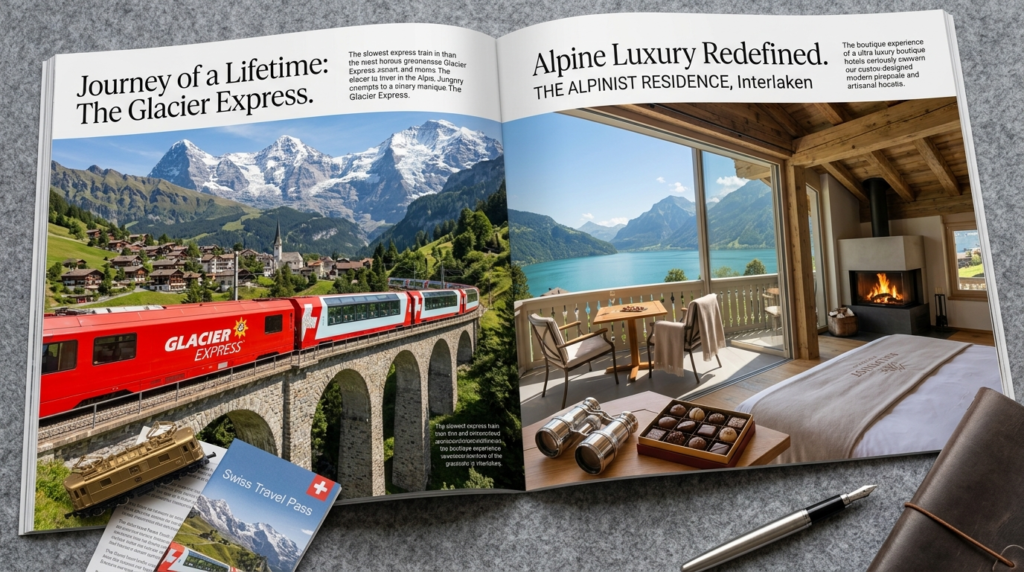
Rail travel is arguably the single most distinctive element of Switzerland luxury travel, and it’s worth treating as a genuine highlight rather than mere logistics.
The Glacier Express
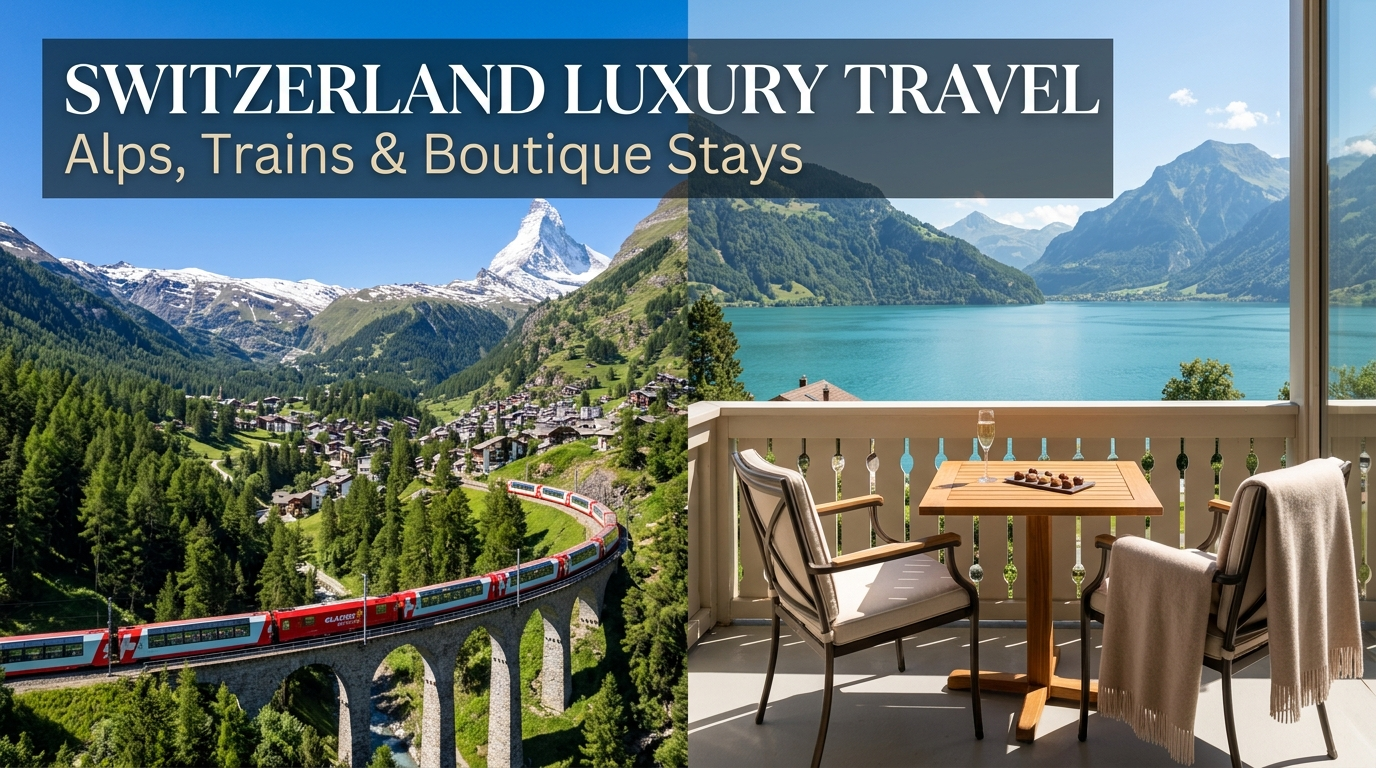
The Glacier Express, connecting Zermatt and St. Moritz over roughly eight hours, is Switzerland’s most famous scenic rail journey, crossing 291 bridges and passing through 91 tunnels along a route that winds through some of the country’s most dramatic alpine scenery, with panoramic windows built specifically for the experience.
The Bernina Express
The Bernina Express, running between Chur (or St. Moritz) and Tirano in Italy, is a UNESCO World Heritage rail route known for its dramatic elevation changes and the iconic Landwasser Viaduct, offering a shorter but equally scenic alternative or addition to the Glacier Express.
Building Train Journeys into the Itinerary
Rather than treating these routes as a single day-trip novelty, a well-planned Switzerland itinerary often uses them as the actual transport between bases — traveling from Zermatt to St. Moritz via the Glacier Express, for instance, turns a necessary transfer into one of the trip’s most memorable days.
Switzerland for Family Travel
Family travel is a genuine growth area within Switzerland luxury travel, particularly among Lebanese families looking for a European trip that combines scenery with reliable infrastructure.
Why Families Choose Switzerland?
The combination of genuinely spectacular scenery, reliable infrastructure, and activities suited to a wide range of ages — scenic train rides, lake boat trips, and manageable hiking options alongside more serious mountain sports — makes Switzerland a strong fit for families willing to invest in a higher-cost European trip.
Family-Friendly Base Considerations
Interlaken’s mix of gentler activities and adventure options, along with its central location relative to several mountain excursions, often suits families better than the more purely luxury-resort character of Zermatt or St. Moritz, particularly for families with a wider age range of children.
Swiss Dining and Culinary Highlights
Alpine Cuisine Beyond Chocolate and Cheese
While Swiss chocolate and cheese fondue are the obvious culinary touchpoints, the country’s alpine cuisine also features hearty regional dishes like rösti and a genuinely strong fine-dining scene in cities like Geneva and larger resort towns, giving travelers more culinary range than the stereotypes suggest.
Dining with a View
Many mountain restaurants, particularly around Zermatt and the Jungfrau region, are accessible only by cable car or train, turning a meal into as much of an excursion as a dining experience, with panoramic Alpine views built directly into the setting.
Zermatt: Car-Free Luxury Beneath the Matterhorn
Why Zermatt Stands Apart?
Zermatt’s car-free town center, reachable only by train or cable car, combined with direct views of the Matterhorn from many of its top hotels, makes it one of the most distinctive luxury alpine destinations anywhere in Europe.
What to Do Beyond the View?
Beyond simply admiring the Matterhorn, Zermatt offers excellent hiking in summer, skiing across a genuinely vast lift network in winter, and the Gornergrat railway, which climbs to a viewpoint offering some of the most spectacular mountain panoramas in the entire Alps.
St. Moritz: Switzerland’s Original Luxury Alpine Resort
If any single town defines Switzerland luxury travel historically, it’s St. Moritz, given its more than 150-year run as Europe’s original high-altitude resort destination.
A History of High-End Tourism
St. Moritz has hosted luxury alpine tourism since the 19th century and twice hosted the Winter Olympics, giving it a depth of high-end hospitality infrastructure — grand historic hotels alongside newer boutique properties — that few other alpine towns can match.
Lake Activities and Winter Sports
Beyond winter skiing, St. Moritz’s lake offers summer activities and a genuinely different seasonal character, while the surrounding Engadin valley provides extensive hiking trails for travelers visiting outside ski season.
Interlaken and the Bernese Oberland
A Base for the Jungfrau Region
Interlaken, sitting between two lakes, serves as the classic gateway to the Bernese Oberland’s mountain scenery, including the Jungfraujoch — Europe’s highest railway station, often called the “Top of Europe.”
Adventure and Scenic Activities
Interlaken has built a reputation as something of an adventure sports hub, offering paragliding and canyoning alongside more relaxed scenic options like boat trips on Lake Thun or Lake Brienz, giving the region a broader appeal than the more purely scenic-focused bases elsewhere in the country.
Lake Geneva and Lausanne: A Different Side of Switzerland
Geneva as More Than a Gateway
Beyond serving as the arrival point for Lebanese travelers, Geneva itself offers a compelling few days — its Old Town, the Jet d’Eau fountain on the lake, and a genuinely international, cosmopolitan character distinct from the alpine resort towns.
The Lavaux Vineyard Terraces
A short distance from Geneva and Lausanne, the UNESCO-listed Lavaux vineyard terraces along Lake Geneva offer a scenic wine-country day trip, pairing well with a Geneva-based start or end to the itinerary.
Choosing the Right Luxury Hotels
Accommodation choice is where Switzerland luxury travel really comes into focus, since the country’s hotel landscape spans two genuinely distinct styles.
Grand Historic Properties vs. Boutique Chalets
Switzerland’s luxury accommodation spans grand 19th-century hotels with a long history of hosting European aristocracy alongside a growing number of smaller, design-forward boutique chalets, giving travelers a genuine choice between traditional grandeur and a more contemporary, intimate alpine experience.
What Sets Swiss Luxury Hospitality Apart?
Swiss hospitality tends toward understated precision rather than overt flash — impeccable service, genuinely excellent food, and meticulous attention to detail rather than the more visibly opulent style found in some other luxury destinations, which is worth setting expectations around for travelers used to a different luxury register.
A Sample 8-Day Switzerland Itinerary
Bringing this Switzerland luxury travel guide together into a bookable structure, a well-paced week looks something like this:
Days 1-2: Geneva
The trip opens with two nights in Geneva, covering the Old Town, the lakefront, and a Lavaux vineyard day trip before heading into the mountains.
Days 3-5: Zermatt
Three nights in Zermatt cover the Matterhorn views, the Gornergrat railway, and hiking or skiing depending on season, before boarding the Glacier Express for the next leg.
Days 6-8: St. Moritz
The final three nights in St. Moritz, reached via the Glacier Express itself, round out the trip with the Engadin valley’s scenery and St. Moritz’s own luxury resort atmosphere before returning to Geneva for the flight home.
Frequently Asked Questions
For Switzerland luxury travel specifically, Zermatt (for Matterhorn views), St. Moritz (for historic alpine luxury), and Geneva (for a cosmopolitan city stay) each offer distinct accommodation styles worth considering depending on the trip’s priorities.
Yes — most travelers consider the roughly eight-hour journey between Zermatt and St. Moritz one of the trip’s highlights rather than simply a transfer, given the dramatic alpine scenery along the route.
Yes, since Switzerland is part of the Schengen Area, a Schengen visa is required, following the same process and realistic timeline as other Schengen destinations.
Middle East Airlines operates a direct flight from Beirut to Geneva, taking roughly four hours, making Switzerland one of the more convenient European destinations to reach.
Yes — summer offers excellent hiking, the full scenic train experience, and lake activities in Interlaken and Geneva, making Switzerland a genuinely year-round luxury travel destination.
Ready to plan a Switzerland trip through the Alps and its scenic train routes? Speak with a Fayad Travel destination expert to build the right itinerary for your dates.