
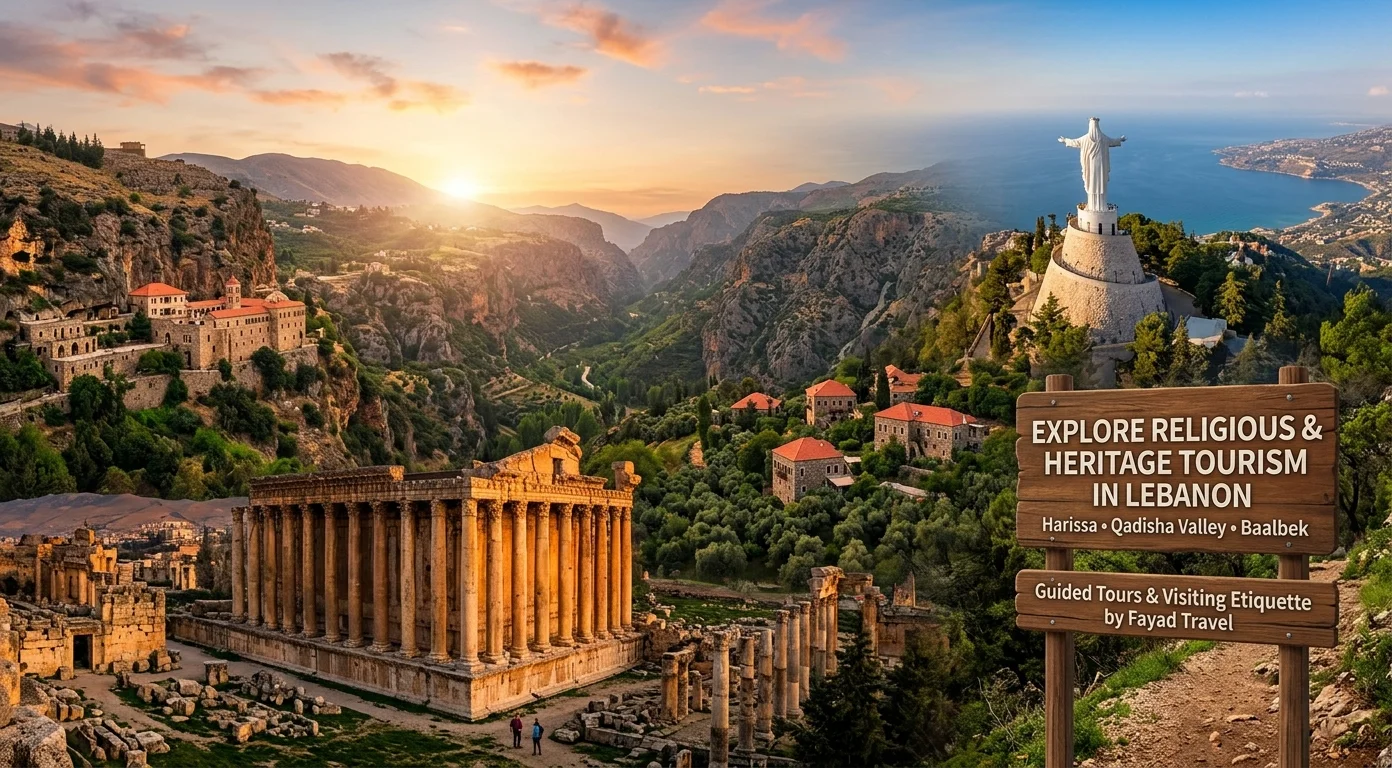
Few countries pack as much layered religious and historical significance into so small a footprint as Lebanon. Within a single day’s drive, a traveler can stand inside Roman temples built to rival anything in Italy, climb to a mountaintop shrine overlooking the Mediterranean, and walk through a valley where monasteries have been carved into cliffs since the earliest centuries of Christianity. Religious tourism in Lebanon isn’t a niche interest here — it’s woven into the country’s everyday landscape.
This guide covers the sites that matter most for heritage tourism in Lebanon, how to plan a visit around them respectfully, and what makes this destination genuinely distinct from other religious and heritage travel in the region.
Why Lebanon Is a Layered Destination for Religious and Heritage Travel?
Lebanon’s geography — a narrow coastal strip backed by mountains — has made it a meeting point and refuge for different faiths and civilizations for thousands of years. Phoenician ports, Roman temples, early Christian monasteries, and significant sites for multiple religious communities all sit within a landscape small enough to cover meaningfully in a single trip, which is unusual even among destinations known for religious tourism.
2,000+ years of continuous religious significance across Lebanon’s major sites
UNESCO World Heritage status held by both Baalbek and the Qadisha Valley
1 day realistic time to combine two major heritage sites in a single excursion
The Essential Sites
Harissa: Our Lady of Lebanon
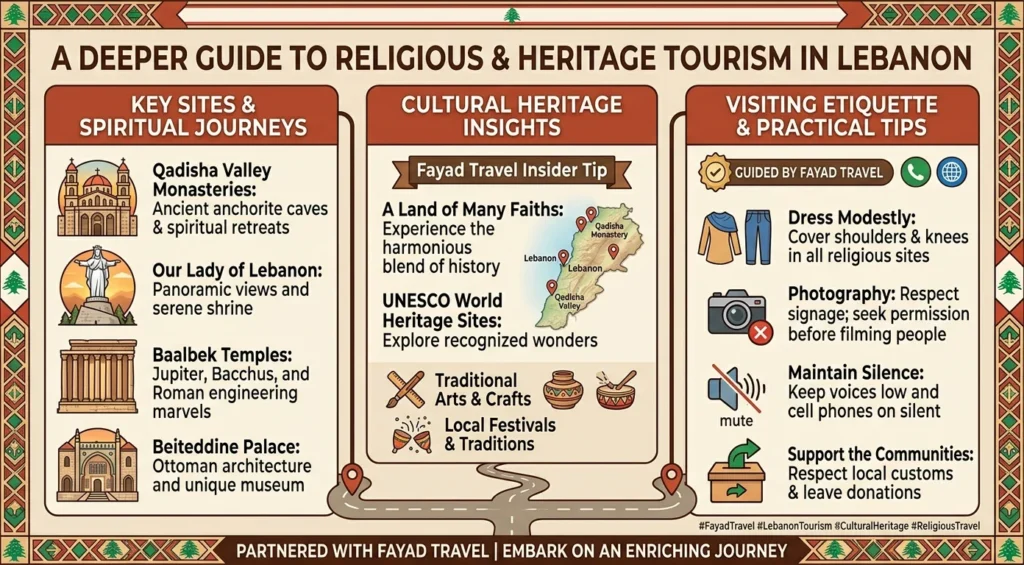
Perched above the coastal town of Jounieh, the shrine of Our Lady of Lebanon at Harissa draws visitors for both its religious significance and its sweeping view over the Mediterranean. A cable car ride up adds to the experience, making it one of the more accessible pilgrimage sites to combine with a half-day coastal itinerary.
The Qadisha Valley: Monasteries Carved Into the Cliffs
Recognized as a UNESCO World Heritage Site, the Qadisha Valley has sheltered monastic communities since the earliest centuries of Christianity, with monasteries and hermitages still visible cut directly into the valley’s cliff faces. It remains one of the most atmospheric heritage landscapes in the country, best explored with time to walk rather than only drive through it.
Baalbek: Monumental Roman Temples
Baalbek holds some of the best-preserved and most monumental Roman temple ruins anywhere in the world, including columns among the tallest ever constructed by Roman engineers. While its origins are pre-Christian, Baalbek’s scale and historical weight make it essential to any heritage-focused itinerary in Lebanon, and it’s also a UNESCO World Heritage Site in its own right.
Monasteries and Religious Sites Across the Mountains
Beyond the three major sites above, Lebanon’s mountain regions hold numerous smaller monasteries, churches, and shrines, many still active religious communities rather than purely historical sites. Visiting one of these alongside a larger landmark often gives a more intimate sense of Lebanon’s living religious heritage, rather than just its monuments.
Planning a Respectful and Well-Paced Visit
| Site | Good Pairing | Practical Note |
|---|---|---|
| Harissa | Jeita Grotto, coastal lunch in Jounieh | Cable car can have queues at peak hours |
| Qadisha Valley | Cedars of God, mountain-town lunch | Allow walking time; terrain is uneven in parts |
| Baalbek | Bekaa Valley wineries | Best visited with a guide for historical context |
“What makes Lebanon unusual isn’t any single site — it’s how many layers of history sit within driving distance of each other.”
Etiquette for Visiting Active Religious Sites
- Dress modestly, covering shoulders and knees, regardless of the site’s specific faith tradition
- Keep voices low inside active monasteries and places of worship
- Ask before photographing inside churches, monasteries, or during active services
- Expect some sites to have limited opening hours around prayer or service times
- Move at a respectful pace — many of these remain active communities, not just tourist stops
Why a Guided Visit Adds Real Value Here?
Religious and heritage sites in Lebanon carry historical and spiritual context that isn’t always obvious from a plaque or a guidebook. A knowledgeable local guide can explain the layered history behind a site like Baalbek, or the living monastic tradition still present in the Qadisha Valley, turning a visit from sightseeing into genuine understanding. This is especially valuable for travelers combining several sites in one trip, where context helps connect what might otherwise feel like a disconnected list of stops.
Frequently Asked Questions
Harissa, the Qadisha Valley, and Baalbek are the three most significant, each offering a different layer of Lebanon’s religious and historical depth — from a modern pilgrimage shrine to ancient Roman temples.
Yes, along with the forest of the Cedars of God nearby. Baalbek also holds UNESCO World Heritage status separately.
Modest dress covering shoulders and knees is appropriate at most religious sites, regardless of the specific faith tradition associated with the location.
Yes, though they’re spread across different regions — a well-paced itinerary over several days, grouped by region, works better than attempting all three in a single rushed day.
Yes — we can arrange knowledgeable local guides and a well-paced itinerary covering Lebanon’s major religious and heritage sites.
Planning a religious or heritage-focused trip to Lebanon?
Read the full guide and speak to a Fayad Travel destination expert to plan your visit.Speak to a Destination Expert