
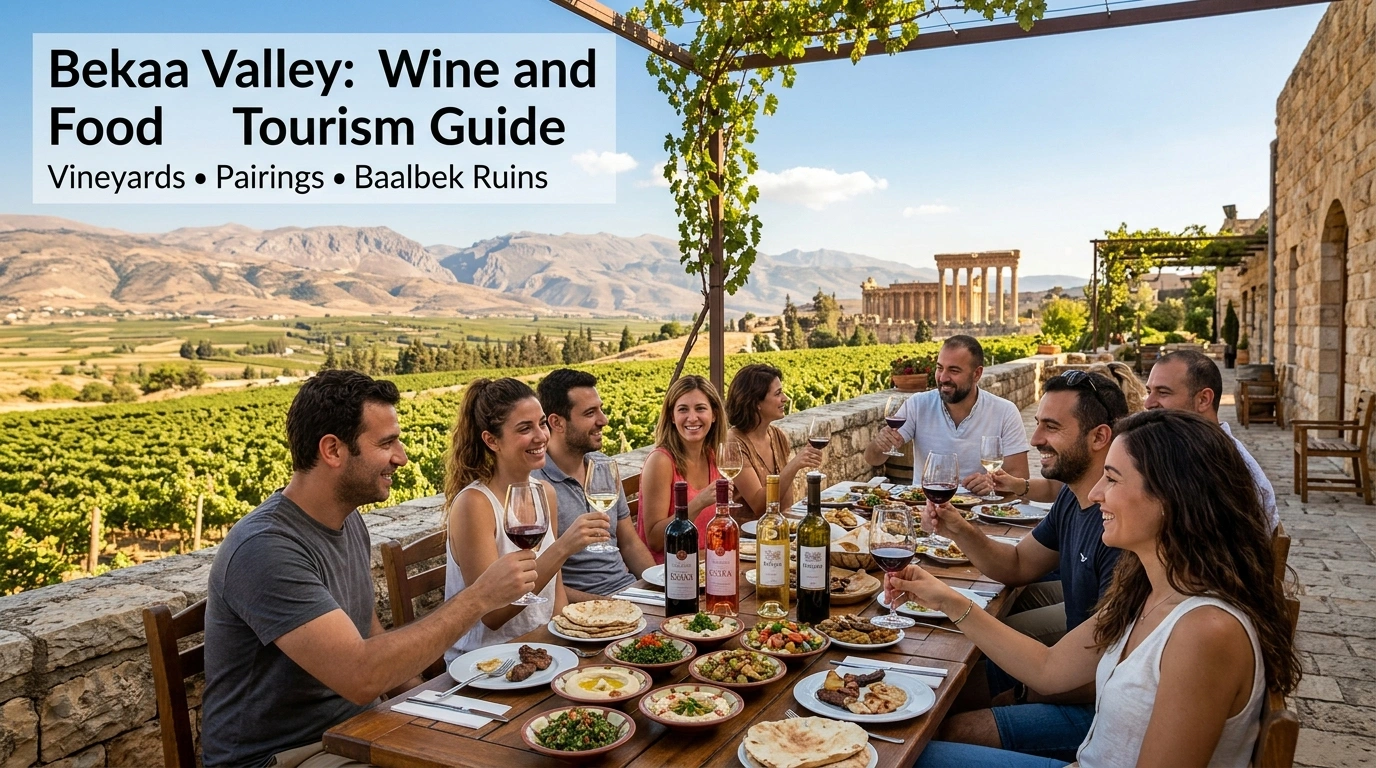
Lebanon’s winemaking history stretches back thousands of years, to a region the Phoenicians and Romans both recognized as exceptional for viticulture, and the Bekaa Valley remains the country’s wine heartland today — a fertile plain framed by mountain ranges on either side, producing grapes for some of the Middle East’s most internationally recognized wine labels. This guide covers Bekaa Valley wine tourism in full: which estates to visit, what a proper vineyard lunch looks like, and how to pair a wine day with the region’s other major draw, the Roman ruins at Baalbek — everything needed to plan a genuinely complete day trip rather than just a single winery stop.
Why the Bekaa Valley Produces Such Distinctive Wine?
Understanding this backdrop is worth a moment before diving into the practical side of Bekaa Valley wine tourism, since the region’s geography genuinely shapes the character of what ends up in the glass.
Elevation and Climate
Sitting at roughly 1,000 meters above sea level between Mount Lebanon and the Anti-Lebanon range, the Bekaa Valley benefits from a distinctive combination of high elevation, ample sunshine, and cooler nighttime temperatures that together produce grapes with a character distinct from lower-altitude Mediterranean wine regions.
A Winemaking Tradition Spanning Millennia
Wine production in this region predates even the Romans, who built the Temple of Bacchus at Baalbek specifically in honor of the god of wine — a detail that gives a Bekaa wine visit a genuinely deep historical throughline rather than being a purely modern tourism development.
Budgeting for a Bekaa Wine Day
Cost is one of the more pleasant surprises in Bekaa Valley wine tourism, given how accessible it remains relative to comparable wine regions elsewhere.
Typical Costs
A guided winery tour and tasting typically runs a modest per-person fee, often $10 to $25 depending on the estate and tasting flight, while a full vineyard lunch with wine pairing typically runs $30 to $60 per person, making a full Bekaa wine day genuinely accessible relative to comparable wine tourism experiences elsewhere in the world.
Adding a Private Driver to the Budget
A private driver for the full day, covering the drive from Beirut and transport between estates, typically runs $80 to $120, a worthwhile addition given both the distances involved and the amount of tasting on offer.
Is Bekaa Wine Tourism Suitable for Families?
Wineries with Broader Appeal
Some estates, particularly those with historical sites like Ksara’s Roman-era cellars, offer genuine appeal beyond wine tasting itself, making a family visit with older children or teenagers more viable than a purely tasting-focused itinerary would suggest.
Planning Around Non-Wine-Focused Family Members
For families where not everyone is interested in wine tasting specifically, pairing the winery visit with Baalbek’s more universally appealing ruins, or choosing an estate with a scenic garden or grounds to explore, helps keep the day engaging for the whole group.
The Bekaa Valley’s Leading Wine Estates
Chateau Ksara
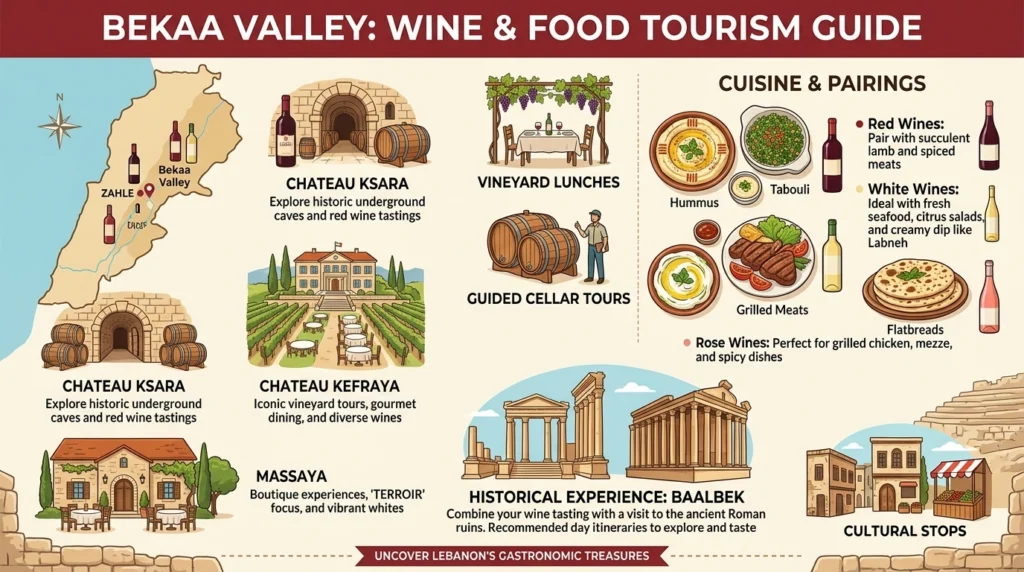
Chateau Ksara, Lebanon’s oldest and largest winery, dates back to the mid-19th century and is known for its extensive underground cellars, originally Roman-era tunnels later expanded for wine storage, making the estate as much a historical site as a working winery.
Chateau Kefraya
Chateau Kefraya, one of the valley’s other major producers, offers a well-developed visitor experience with a restaurant, guided tastings, and views across the vineyards toward the surrounding mountains.
Massaya
Massaya represents a newer generation of Bekaa winemaking, known for blending traditional Lebanese winemaking with French winemaking expertise, and offers a distinctly different atmosphere from the valley’s older, more historic estates.
Domaine des Tourelles
Domaine des Tourelles, one of Lebanon’s original commercial wineries, also produces the country’s well-known arak, giving visitors a chance to explore both wine and Lebanon’s traditional anise-flavored spirit within the same estate visit.
Beyond Wine: Arak and Other Local Products
Lebanon’s Traditional Arak
Arak, Lebanon’s traditional anise-flavored spirit distilled from grapes, is produced by several Bekaa estates alongside their wine, and a tasting comparing the two gives visitors a fuller sense of the region’s overall spirits and winemaking tradition rather than wine alone.
Local Produce and Markets
The Bekaa Valley’s agricultural richness extends well beyond grapes, and some visits include stops at local markets or produce stands selling the region’s fruits, vegetables, and dairy products, rounding out the food tourism side of a Bekaa day beyond the wineries themselves.
What a Vineyard Lunch Actually Looks Like?
Mezze Paired with Estate Wine
Many Bekaa wineries offer a full vineyard lunch featuring traditional Lebanese mezze — a spread of small shared dishes — specifically paired with the estate’s own wine selection, giving visitors a genuine sense of how Lebanese food and wine culture are meant to be experienced together.
Seasonal and Harvest-Time Menus
During the autumn harvest season, some estates offer menus built specifically around seasonal, harvest-time ingredients, adding an extra layer of specificity to a visit timed around this period.
Building a Bekaa Wine Day
A Sample One-Day Itinerary
A well-paced Bekaa wine day might combine a morning tour and tasting at Chateau Ksara, a mezze lunch at a second estate like Kefraya or Massaya, and an afternoon visit to Baalbek’s Roman ruins before returning to Beirut in the evening.
Pairing Wine Country with Baalbek
Because Baalbek sits within the same general region as the valley’s main wine estates, combining the two in a single day trip from Beirut makes efficient use of the roughly ninety-minute drive out from the capital, rather than treating wine tasting and ancient history as two separate excursions.
Best Time to Visit for Wine Tourism
Harvest Season (September-October)
September into early October brings the grape harvest, adding a seasonal dimension to a Bekaa visit, with some estates welcoming visitors to observe or participate in harvest activities during this specific window.
Spring and Early Summer
April through June offers particularly pleasant weather for exploring the vineyards themselves, with the valley’s landscape at its greenest before summer’s heat sets in.
Practical Tips for a Bekaa Wine Tour
Arranging Transport
Given the distances between estates and the amount of wine tasting typically involved, a private driver is the most practical way to visit multiple wineries in a single day without anyone needing to manage driving after tastings.
Booking Tours and Lunches in Advance
Popular estates, particularly during harvest season or weekends, often require advance booking for guided tours and vineyard lunches, making it worth confirming reservations before finalizing the day’s itinerary.
Frequently Asked Questions
Among the essential stops for Bekaa Valley wine tourism, Chateau Ksara (Lebanon’s oldest, known for its Roman-era cellars), Chateau Kefraya, Massaya, and Domaine des Tourelles are the region’s most visited and well-regarded estates.
Yes — the two sit within the same general region, making it efficient to combine a morning of wine tasting with an afternoon at Baalbek’s Roman ruins in a single day trip from Beirut.
September into early October offers the grape harvest and a genuinely immersive seasonal experience, while April through June offers particularly pleasant weather for exploring the vineyards themselves.
Most estate lunches feature traditional Lebanese mezze paired specifically with the winery’s own wine selection, giving visitors a genuine sense of how the region’s food and wine are meant to be enjoyed together.
It’s the most practical option, given both the distances between estates and the amount of tasting typically involved, allowing everyone in the group to enjoy the wine without needing to drive.
Ready to plan a Bekaa Valley wine and food tour? Request a tailored quote from Fayad Travel and we’ll build the right route for your day.