

A trip home is never quite like other travel — it comes with its own logistics of family visits, village obligations, and a calendar shaped by when everyone else in the diaspora happens to be visiting too. This guide is built specifically around Lebanese expat travel home planning, addressing the timing, crowding, and practical details that a generic Lebanon travel guide written for first-time foreign visitors simply doesn’t cover — the specific rhythms and pressures of a return trip rather than a first visit.
Understanding Lebanon’s Peak Diaspora Travel Periods
Timing sits at the center of nearly every Lebanese expat travel home decision, since when you go shapes almost everything else about the trip.
Summer: The Busiest Season by Far
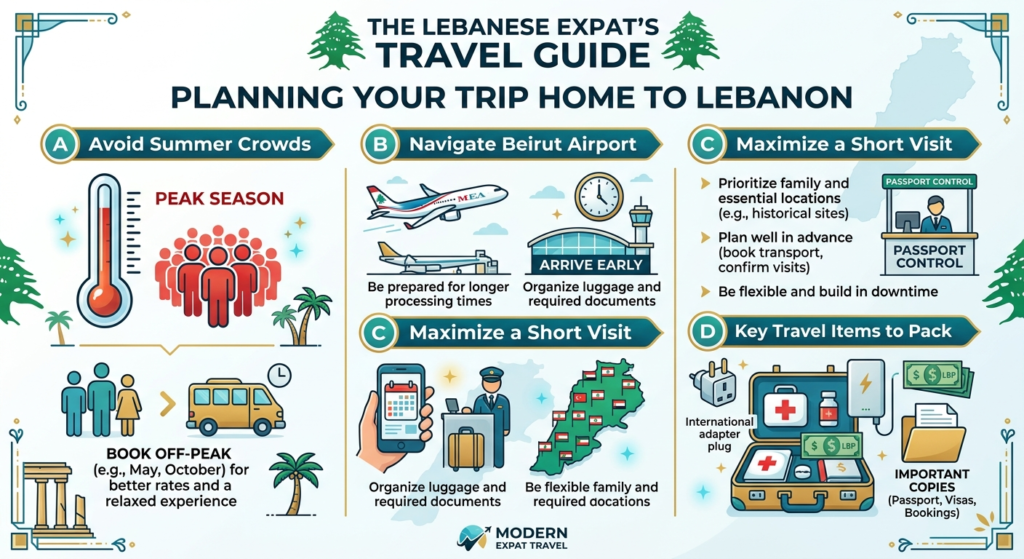
June through August is when the largest share of the Lebanese diaspora returns home, coinciding with school summer holidays abroad and a packed calendar of weddings, family gatherings, and village festivals — meaning flights, car rentals, and even restaurant reservations book out considerably further ahead than during quieter months.
Christmas and New Year
The December holiday period draws a second major wave of diaspora travel, particularly among expats living in colder climates seeking both family time and Lebanon’s own holiday atmosphere, again pushing flight prices and availability to their yearly peak alongside summer.
Mother’s Day and Religious Holidays
Lebanon’s Mother’s Day (March 21) is a notably significant travel occasion for the diaspora, alongside Eid al-Fitr, Eid al-Adha, and Easter, each drawing a smaller but still meaningful surge in returning expats timed around family and religious observance.
Why Timing Your Visit Matters?
Getting the timing right is often the single most consequential decision in Lebanese expat travel home planning, since it affects cost, crowding, and even which relatives are actually around to see.
The Trade-Off Between Peak Season and Off-Peak Value
Visiting during peak season means seeing the most family and friends, since so much of the diaspora times trips together, but it also means the highest flight costs, the most crowded coastal and mountain destinations, and the least flexibility on last-minute plans.
Considering a Shoulder-Season Visit
Spring (April-May) and early autumn (September-October) offer considerably better flight availability and pricing, along with a quieter, more relaxed version of the country — worth genuine consideration for expats whose visit isn’t tied to a specific family event or reunion.
Budgeting for a Trip Home
Cost is a genuine consideration in any Lebanese expat travel home plan, particularly given how much flight prices swing between peak and shoulder seasons.
Why Costs Run Higher During Peak Periods?
Flight prices to Beirut from major diaspora hubs — North America, Europe, Australia, West Africa, and the Gulf among them — can run considerably higher during summer and December compared to shoulder-season fares, sometimes by a significant margin on the same route.
Factoring in the Full Cost of a Visit
Beyond flights, expats should budget for local transport, gifts, and the informal costs of extended family gatherings that a trip home often involves — expenses that don’t always factor into a first estimate built purely around flight and accommodation costs.
Entry Requirements for Dual Citizens and Long-Term Expats
Traveling on a Lebanese Passport vs. a Foreign One
Lebanese citizens holding dual citizenship generally travel to Lebanon on their Lebanese passport, since Lebanon does not always recognize dual nationality in the same way as the second country, and entering on a foreign passport can create complications around residency, taxation, or other administrative matters best clarified in advance.
Renewing Documents Before Traveling
Expats whose Lebanese passport or ID documents have lapsed or are nearing expiry should address this well before booking a trip home, since renewal processes through Lebanese consulates abroad can take longer than expected, particularly during busy periods.
Making the Most of a Short Visit
Prioritizing Family Time vs. Sightseeing
For expats with limited vacation time, the classic tension between spending the whole trip with family and actually getting out to see the country is worth planning for explicitly, rather than assuming both will happen naturally without a deliberate schedule.
Combining Family Visits with Day Trips
Building in a few day trips — to Byblos, the Chouf, or wherever the extended family isn’t already gathering — gives a short visit some variety beyond the family home, particularly valuable for expats bringing children who’ve never seen these sites themselves.
Bringing the Next Generation
Second-generation family visits are an increasingly common part of Lebanese expat travel home planning, as diaspora families raise children fully abroad.
Introducing Children Born Abroad to Lebanon
For expats whose children were born and raised abroad, a trip home is often their first real introduction to the country, and building in deliberate time for both family bonding and genuine sightseeing helps the visit feel like more than just an obligation to relatives they don’t yet know well.
Helping Children Navigate Language and Cultural Differences
Children more comfortable in a foreign language than Arabic sometimes need a bit of extra support navigating conversations with extended family, and preparing them beforehand with a few basic phrases or simply setting expectations about the visit can ease this transition.
What to Expect at the Airport?
Navigating Arrivals During Peak Season
Beirut’s Rafic Hariri International Airport sees considerably heavier traffic during peak diaspora travel periods, and building in extra time for immigration and baggage claim during these windows avoids the frustration of an unexpectedly long arrivals process on top of jet lag.
VIP and Fast-Track Options for a Smoother Arrival
For expats wanting to skip the busiest-period queues, particularly when returning with elderly parents or young children, arranging fast-track or meet-and-assist services in advance can make a genuine difference to how smoothly the trip starts.
Bringing Family and Gifts: Practical Considerations
Luggage Allowances for Extended Family Visits
Expats often travel with considerably more luggage than a typical trip, given gifts and items for extended family, making it worth checking baggage allowances well ahead of time and potentially budgeting for excess baggage fees if travel with a full family’s worth of gifts is planned.
Customs Considerations for Gifts and Items
Larger or higher-value gifts brought into Lebanon may be subject to customs duties, and it’s worth having a general sense of current thresholds before packing, particularly for electronics or other higher-value items.
Accommodation Considerations for Expats
When the Family Home Isn’t an Option?
Not every expat has a family home to stay in, whether due to a sold property, a smaller family footprint remaining in Lebanon, or simply wanting independence during the visit, and booking a hotel or short-term rental well ahead of peak season protects against the same booking crunch that affects flights.
Balancing Independence with Family Expectations
Even expats staying independently often face gentle (or not-so-gentle) family expectations about time spent at the family home, and setting expectations early in the planning process tends to smooth this over better than negotiating it after arrival.
Reconnecting with Extended Family and Village Ties
Balancing Multiple Family Obligations
Many expats returning home face a genuine logistical challenge in dividing limited time fairly across extended family, particularly when relatives are spread across different regions of the country, making a rough schedule worked out before arrival genuinely useful.
Village and Community Events
Summer in particular often means village festivals, weddings, and community gatherings that extend beyond immediate family, and knowing which events are happening during a visit — often communicated informally through family networks — helps plan around them rather than being caught by surprise.
Frequently Asked Questions
For most Lebanese expat travel home plans, it depends on priorities: summer and the December holidays offer the most family and diaspora activity but the highest costs and crowds, while spring and early autumn offer a quieter, more affordable, though less socially concentrated visit.
Summer coincides with school holidays abroad and a concentrated calendar of weddings and family gatherings, drawing the largest share of the diaspora home simultaneously and pushing flight and activity availability to its tightest point of the year.
Yes, particularly for summer, Christmas, or Mother’s Day travel, since these periods see the highest demand and earliest sell-outs on popular routes from diaspora hub cities.
Building in extra time for immigration and baggage claim, and considering a fast-track or meet-and-assist service for elderly parents or young children, can meaningfully ease a peak-season arrival.
Working out a rough schedule before arrival — allocating specific days to family visits and building in a few day trips to nearby sites — helps make the most of a limited trip without either side feeling shortchanged.
Planning your next trip home and want help with the logistics? Speak with a Fayad Travel destination expert to make the visit as smooth as possible.