

A destination wedding solves a problem many Lebanese couples run into with a home celebration — the guest list politics, the venue limitations, the sheer scale a Lebanese wedding often expects — by reframing the event entirely around a place rather than a checklist of local obligations. But planning one from Lebanon involves a few genuinely Lebanon-specific wrinkles, starting with the legal marriage question, that this guide to destination wedding planning from Lebanon covers alongside the more universal planning steps.
Legal Marriage vs. Symbolic Ceremony: The First Decision
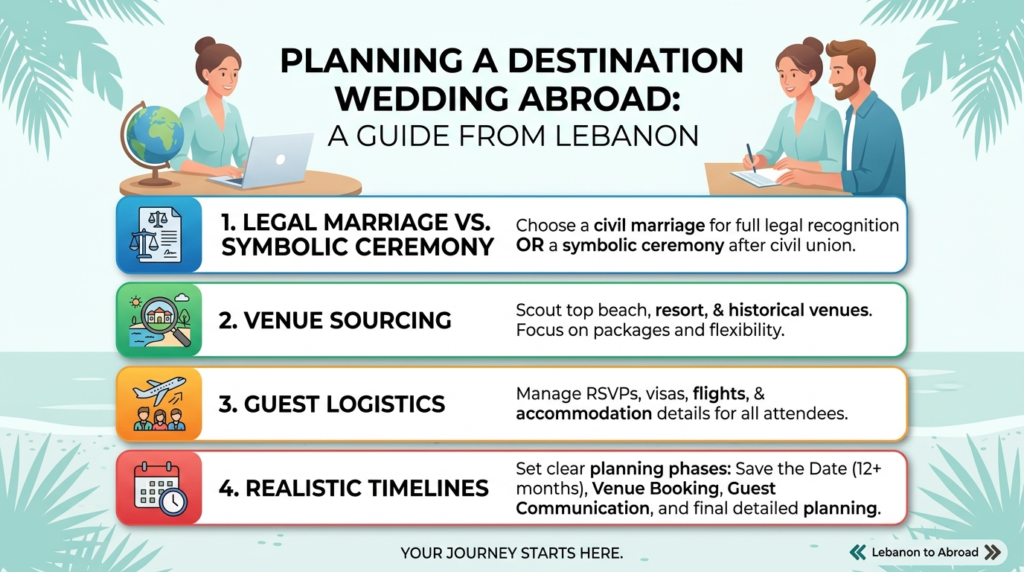
This is arguably the single most important decision in destination wedding planning from Lebanon specifically, since it shapes nearly every subsequent choice.
Why This Distinction Matters More for Lebanese Couples?
Lebanon has no civil marriage of its own, and many countries require a residency period or extensive local documentation before a marriage performed there is legally recognized, which is why many Lebanese couples choose to handle the legal marriage separately — often through a civil ceremony in Cyprus, a common route for Lebanese couples, or a religious ceremony recognized under Lebanese law — and treat the destination wedding abroad as a symbolic ceremony rather than the legally binding event itself.
Confirming Requirements Before Committing to a Venue
Because legal marriage requirements vary significantly by country and change periodically, couples should confirm current requirements directly with the destination country’s embassy or a qualified legal advisor before finalizing any venue, rather than assuming a symbolic-versus-legal approach that worked for a friend’s wedding will apply the same way to a different destination or timeline.
Working with a Wedding Planner vs. Self-Planning
Why Distance Makes a Planner More Valuable?
Coordinating vendors, venues, and guest logistics across a distance genuinely changes the calculus around hiring a professional planner compared to a home wedding, since site visits and in-person vendor meetings are far less practical when the wedding is in another country.
What a Travel Agency Adds Specifically?
A travel agency experienced in destination weddings can bundle the guest travel logistics — group flights, hotel blocks, visa coordination — alongside the wedding planning itself, reducing the number of separate parties a couple needs to manage throughout the process.
Choosing a Destination Wedding Location
Matching the Destination to Guest Logistics
Beyond personal preference, a destination wedding location needs to genuinely work for the expected guest list — flight accessibility from Lebanon, visa requirements for guests, and a strong enough hotel inventory to accommodate the whole group under a reasonable number of properties all matter as much as the scenery.
Popular Destinations for Lebanese Couples
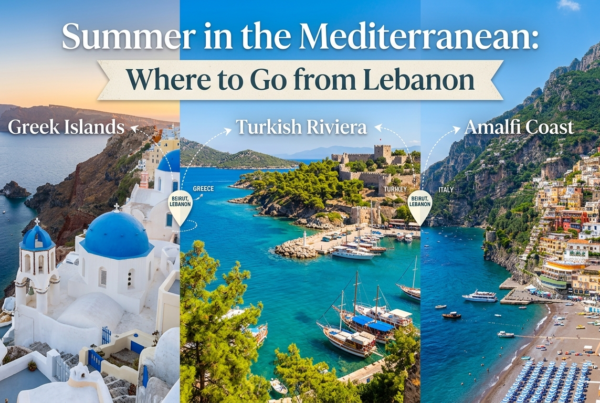
Santorini and the Greek Islands, the Amalfi Coast, and Mediterranean-adjacent destinations tend to be popular choices given their relative accessibility from Beirut, though longer-haul destinations like the Maldives or Seychelles work well for couples planning a more intimate, smaller-guest-list event.
Pre-Wedding Events and Extended Celebrations
Welcome Dinners and Group Excursions
Because guests are already traveling and typically staying for several days, many destination weddings build in a welcome dinner on arrival and one or two group excursions during the trip, turning the wedding into a multi-day celebration rather than a single event.
Balancing Guest Time with the Couple’s Own Preparation
While these extra events strengthen the overall experience for guests, couples should build in enough personal downtime around them to actually prepare for the wedding day itself, rather than treating every day of the trip as another hosting obligation.
Venue Sourcing: What to Look For
Capacity and Layout
A venue needs to comfortably accommodate the actual expected guest count, with enough flexibility in layout to handle both the ceremony itself and any reception that follows, rather than assuming a beautiful photo of the space automatically means it functions well for the specific event planned.
Vendor Relationships and Local Coordination
Venues that come with established local vendor relationships — catering, florals, photography — considerably simplify planning from a distance, compared to a venue that leaves the couple to independently source every vendor in an unfamiliar destination.
Weather Contingency Planning
For outdoor venues specifically, confirming what contingency plan exists for poor weather is worth doing well ahead of the event, rather than discovering the gap only if conditions turn against the plan on the day itself.
Guest Logistics: Getting Everyone There
Visa Coordination Across the Guest List
Depending on the destination, some guests may need visas that others don’t, and coordinating this across a guest list means treating it as its own planning workstream rather than assuming everyone can handle their own travel documents independently.
Group Flight and Hotel Blocks
Coordinating group flight bookings and a hotel block for guests, ideally announced well ahead of the wedding date, gives guests the best chance at favorable rates and keeps the group reasonably together rather than scattered across a destination’s accommodation options.
Managing a Realistic Guest Count
Because destination weddings inherently filter the guest list down to those able and willing to travel, couples should expect a meaningfully smaller attendance than a home wedding would draw, and plan the budget and venue capacity around that realistic, smaller number rather than the full guest list a Lebanon-based wedding might expect.
Budgeting for a Destination Wedding
Cost is one of the more misunderstood aspects of destination wedding planning from Lebanon, since the savings and added expenses don’t always land where couples expect.
What Typically Costs More Than Expected?
Vendor travel fees (flying in a preferred photographer or hair and makeup artist, for instance), guest gifts or welcome events, and the cost of the couple’s own multi-day stay around the wedding date are all expenses that first-time destination wedding planners commonly underestimate.
Where Destination Weddings Can Save Money?
Compared to a large home wedding, a destination wedding’s naturally smaller guest count often reduces overall catering and venue costs even after accounting for travel expenses, particularly for couples who would have felt obligated to invite a much larger guest list at home.
Photography and Documentation
Bringing a Photographer vs. Hiring Locally
Couples can choose between flying in a trusted photographer from Lebanon (adding travel and accommodation costs to the vendor fee) or hiring a local photographer familiar with the destination’s light and best locations, each with genuine trade-offs worth weighing based on budget and how important a specific photographic style is to the couple.
Legal Documentation to Bring Along
Regardless of whether the ceremony itself is symbolic or legally binding, couples should bring certified copies of any required documents — birth certificates, prior legal marriage certificates if applicable, and passports — since requesting these from Lebanon while already abroad is considerably more difficult than preparing them in advance.
Building a Realistic Planning Timeline
10-12 Months Before
Confirming the destination, venue, and legal marriage approach, along with sending save-the-dates early enough for guests to arrange travel, forms the foundation of the planning timeline.
6-8 Months Before
Finalizing vendor contracts, coordinating group flight and hotel arrangements, and confirming legal marriage documentation requirements should all be settled well before the final planning stretch.
1-2 Months Before
Final headcounts, seating and logistics details, and confirming every vendor and guest travel arrangement is locked in during this final stretch before departure.
Frequently Asked Questions
Effective destination wedding planning from Lebanon starts by deciding whether the destination ceremony will be legally binding or symbolic (with the legal marriage handled separately, often via Cyprus for Lebanese couples), then choosing a destination matching guest logistics, sourcing a venue with strong local vendor relationships, and building a realistic 10-to-12-month planning timeline.
Many choose to, given that Lebanon has no civil marriage and many destination countries require residency or extensive documentation for a legally binding marriage there — a common approach is a civil ceremony in Cyprus followed by a symbolic ceremony at the destination.
Considerably fewer than a home wedding, since travel naturally filters the guest list down to those able and willing to make the trip — couples should budget and choose venue capacity around this smaller, realistic number.
Vendor travel fees for flying in a preferred photographer or stylist, guest welcome events, and the couple’s own extended stay around the wedding date are frequently underestimated expenses.
Ideally 10 to 12 months, allowing enough time for guests to arrange travel, for vendor contracts and group bookings to be finalized, and for any legal marriage documentation to be sorted well before the event itself.
Planning a destination wedding and want the venue, guest logistics, and legal details handled properly? Request a tailored quote from Fayad Travel and we’ll help you build the right plan.