
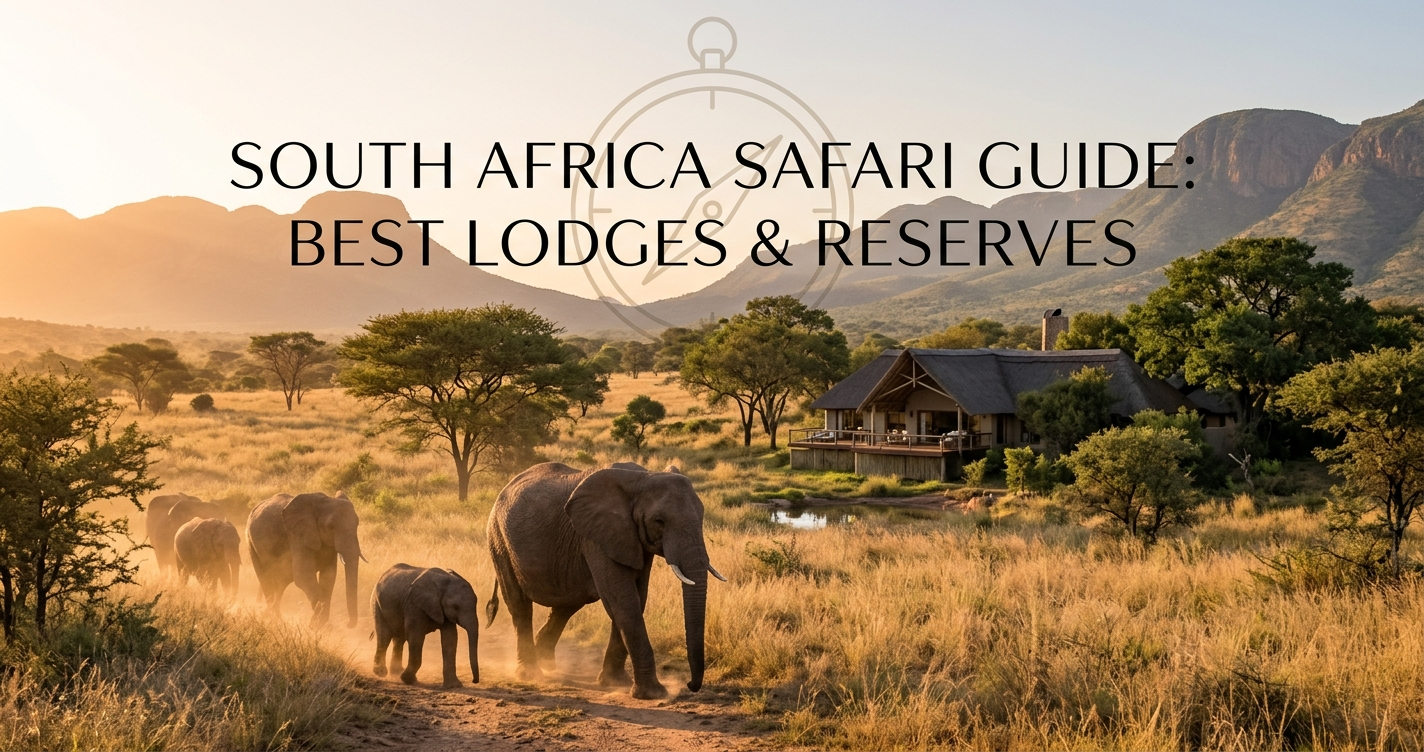
South Africa occupies a distinct spot in the safari world — genuinely excellent Big Five game viewing, a malaria-free reserve option that opens the door to family travel that East Africa’s migration parks don’t offer as easily, and the rare ability to pair a bush stay with a world-class city and wine region on the same trip. This South Africa safari guide covers how to choose between the country’s leading private reserves, where Cape Town fits into the itinerary, and what actually separates one lodge tier from another — enough detail to move from browsing to actually booking.
Why South Africa Is a Different Kind of Safari?
Understanding this distinction is really the starting point for any South Africa safari guide, since it shapes almost every other decision covered here.
Private Reserves vs. National Parks
Much of South Africa’s best luxury safari experience happens not inside Kruger National Park itself but in the unfenced private reserves bordering it, where wildlife moves freely between the reserve and the park while lodges operate with considerably more flexibility than public park rules allow — off-road driving to follow sightings, night drives, and a much lower guest-to-vehicle ratio.
A More Accessible Trip Than East Africa
Because South Africa’s safari regions sit closer to major international gateways and don’t rely on the daylight-dependent light-aircraft logistics common in East Africa, a South Africa safari is often more straightforward to combine with other stops, including a genuinely excellent city extension in Cape Town.
Sabi Sands: South Africa’s Most Prestigious Private Reserve
Any South Africa safari guide worth reading has to start with Sabi Sands, since it remains the benchmark most other reserves get compared against.
Why Sabi Sands Leads the Pack?
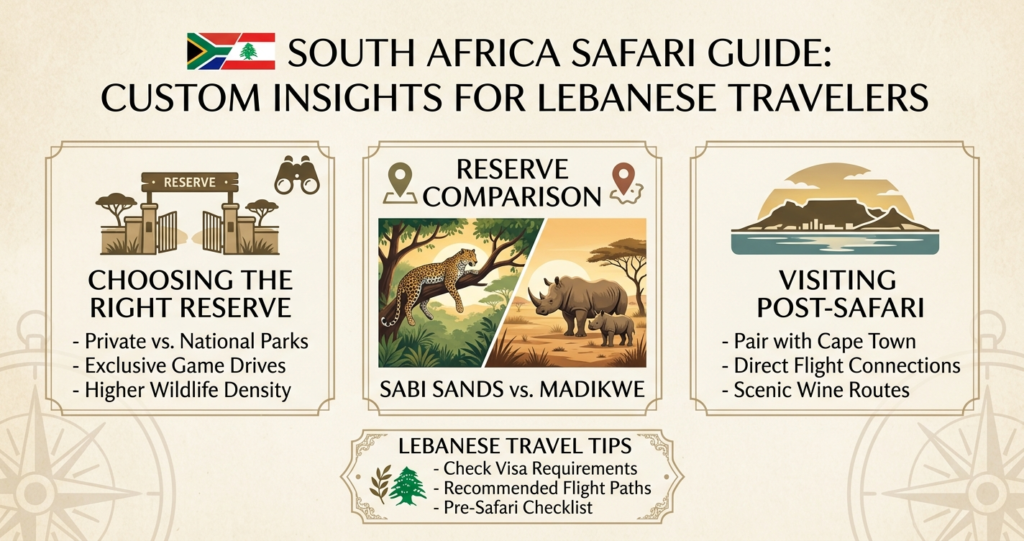
Sabi Sands, bordering Kruger’s western edge, is widely regarded as South Africa’s premier private reserve, known for consistently excellent leopard sightings alongside the rest of the Big Five, thanks to decades of habituation that make the region’s wildlife notably relaxed around vehicles.
What to Expect at a Sabi Sands Lodge?
Lodges here span from exceptional five-star properties to a handful of the most exclusive fly-in camps in the country, generally offering private or small-shared game drives, high-end dining, and a genuinely intimate guest experience given the reserve’s low-density lodge development.
Madikwe: The Malaria-Free Alternative
Why Families Often Choose Madikwe?
Madikwe Game Reserve, near the Botswana border, sits in a malaria-free zone, making it one of the most popular choices for families traveling with young children or any traveler preferring to avoid malaria prophylaxis altogether.
Big Five Viewing Without the Malaria Risk Trade-Off
Despite the malaria-free status, Madikwe still delivers excellent Big Five viewing, including a healthy wild dog population that’s harder to spot in some of the more heavily visited reserves — a genuine trade-off in the opposite direction of what many travelers expect from a malaria-free choice.
Timbavati and Other Kruger-Adjacent Reserves
Rounding out this South Africa safari guide’s reserve comparison, Timbavati and the wider Greater Kruger area deserve equal consideration alongside Sabi Sands and Madikwe.
Timbavati’s White Lion Heritage
Timbavati, another private reserve bordering Kruger, is known partly for its historical association with white lions and offers a similar unfenced, off-road safari experience to Sabi Sands at a generally more accessible price point.
Comparing the Kruger-Adjacent Reserves
Sabi Sands, Timbavati, and the wider Greater Kruger private reserves all deliver a broadly similar core experience — genuinely excellent, guide-led Big Five safaris with the flexibility public parks don’t allow — with the differences between them coming down more to specific lodge choice, price tier, and each reserve’s particular reputation for certain sightings than to dramatically different underlying experiences.
Budgeting for a South Africa Safari
Pricing is one of the more variable elements this South Africa safari guide can help demystify, since lodge rates swing considerably across reserves and tiers.
Typical Lodge Pricing by Reserve
Mid-range lodges across Sabi Sands, Timbavati, and Madikwe typically run $500 to $900 per person per night all-inclusive, while top-tier luxury and ultra-exclusive fly-in camps can run $1,000 to $2,000+ per person per night, generally lower on average than East Africa’s most exclusive Serengeti properties.
A Realistic Total for a Combined Safari-and-Cape-Town Trip
A comfortable 10-night trip for a couple — four nights at a mid-range Sabi Sands or Madikwe lodge, four nights in Cape Town, and two nights in the Winelands — typically totals $8,000 to $15,000, with the safari lodge stretch usually representing the largest single portion of the budget.
Best Time for a South Africa Safari
The Dry Season Advantage
May through September, South Africa’s dry winter season, delivers the best game viewing conditions across all the reserves covered here, as sparse vegetation and animals concentrated around remaining water sources make sightings noticeably easier than during the wetter months.
Pairing Safari Timing with Cape Town’s Own Season
Cape Town’s own best weather runs roughly November through March, meaning a combined itinerary inevitably involves a trade-off between the safari’s ideal dry season and Cape Town’s warmest, sunniest stretch — many travelers split the difference by visiting during the shoulder months of April-May or September-October, when both legs of the trip perform reasonably well.
Pairing a Safari with Cape Town
No South Africa safari guide is complete without addressing the Cape Town question, since so many travelers build their itinerary around combining the two.
Why Cape Town Works So Well as an Extension?
Cape Town offers a genuinely different, equally compelling few days to bookend a safari — Table Mountain, the V&A Waterfront, and a coastline unlike anything found in the bush, giving a South Africa trip real range rather than staying in one register throughout.
The Cape Winelands
A short drive from Cape Town, the Stellenbosch and Constantia wine regions offer an excellent day-trip or overnight addition, pairing well with a Cape Town stay for travelers wanting a wine-country component alongside the city and safari legs of the trip.
Sequencing the Trip
Most itineraries either open with a few days in Cape Town before heading to the bush, or reverse the order, ending the trip with the city and winelands as a relaxed wind-down after several active days of game drives — both sequences work well, and the choice often comes down to which experience makes for a better finale.
Getting There from Lebanon
Flight Routing to South Africa
There’s no direct flight from Beirut to South Africa, so most itineraries route through a Gulf hub — Doha, Dubai, or Abu Dhabi — before continuing to Johannesburg or Cape Town, with total journey time typically running 12 to 16 hours depending on the specific connection and onward destination.
Domestic Connections to the Reserves
Reaching Sabi Sands, Timbavati, or Madikwe from Johannesburg typically involves a short domestic or charter flight to a regional airstrip near the reserve, followed by a road transfer to the lodge itself — logistics most lodges coordinate directly as part of the overall booking.
Family Considerations for a South Africa Safari
Age Minimums and Family-Friendly Lodges
Many private reserve lodges set a minimum age for game drives, often 6 or 8 years old, though a number of family-oriented properties specifically welcome younger children with dedicated family suites, kid-focused activities, and more flexible drive scheduling.
Why Madikwe Often Suits Families Best?
Between the malaria-free status and the growing number of family-specific lodges in the reserve, Madikwe frequently comes up as the strongest match for families with younger children weighing which private reserve to choose.
Choosing the Right Lodge Tier
The final piece of this South Africa safari guide comes down to matching budget and expectations to the right lodge category.
Mid-Range Private Reserve Lodges
Comfortable, well-run lodges across Sabi Sands, Timbavati, and Madikwe in the mid-range tier typically deliver excellent guiding and genuine luxury touches without the ultra-exclusive pricing of the top-tier camps, making this the sweet spot for many first-time South Africa safari travelers.
Ultra-Luxury and Fly-In Options
At the top end, a small number of properties across these reserves offer genuinely exceptional design, dining, and service alongside the same excellent game viewing, commanding a significant premium for the added exclusivity and polish.
What to Pack and Prepare For?
Clothing and Gear for Game Drives
Neutral-colored clothing, layers for cool early morning and evening drives even in warmer months, and a good pair of binoculars round out the practical essentials for any South Africa safari, regardless of which reserve or lodge tier is chosen.
Camera Considerations
Sabi Sands and the other Kruger-adjacent reserves’ habituated wildlife make them particularly rewarding for photography, and travelers serious about capturing the experience often bring a longer zoom lens than they’d use on a typical trip, given how close guides can safely approach sightings in these well-established private reserves.
What to Expect Day to Day on a South Africa Safari?
The Daily Game Drive Rhythm
A typical South Africa safari day follows a well-established rhythm — an early morning game drive before breakfast, free time at the lodge through the heat of midday, and a second drive in the late afternoon extending into a night drive, when nocturnal species become active.
The Malaria Question Beyond Madikwe
For reserves outside malaria-free zones, most travelers take antimalarial medication as a precaution, a conversation worth having with a doctor ahead of the trip regardless of which specific reserve is chosen, alongside standard mosquito-avoidance measures during the stay.
Frequently Asked Questions
As this South Africa safari guide covers, Sabi Sands is widely considered South Africa’s premier reserve for consistently excellent Big Five and leopard sightings, though Madikwe is worth strong consideration for families prioritizing a malaria-free destination.
Both deliver excellent experiences; South Africa offers more accessible logistics, a malaria-free option, and an easy Cape Town extension, while East Africa’s Serengeti and Masai Mara are built around the Great Migration specifically.
Yes, and it’s one of the more popular safari-plus-city combinations globally, typically sequenced as either a Cape Town-first or safari-first itinerary bookending the trip.
Madikwe Game Reserve, near the Botswana border, sits in a malaria-free zone and still delivers strong Big Five viewing, including a notable wild dog population.
Days generally follow an early morning game drive, free time at the lodge through midday, and a second afternoon-into-night drive, giving guests two structured wildlife-viewing sessions daily.
Ready to plan a South Africa safari with the right reserve and lodge tier? Speak with a Fayad Travel destination expert to build the right itinerary for your priorities.