
A rejected insurance certificate is one of the more frustrating ways a visa application can stall — not because the traveler lacked insurance, but because the policy didn’t technically meet the destination’s specific rules. Coverage amount, deductible clauses, geographic scope, and even how the policy is labeled can all trigger a rejection that has nothing to do with whether the traveler is actually protected abroad. This guide covers exactly what travel insurance for visa application purposes needs to include, where it’s a hard requirement versus a strong recommendation, and how to avoid the most common rejection triggers — so a perfectly good travel policy doesn’t accidentally become the reason a visa gets held up.
Where Travel Insurance Is Actually Mandatory?
The Schengen Area’s Legal Requirement
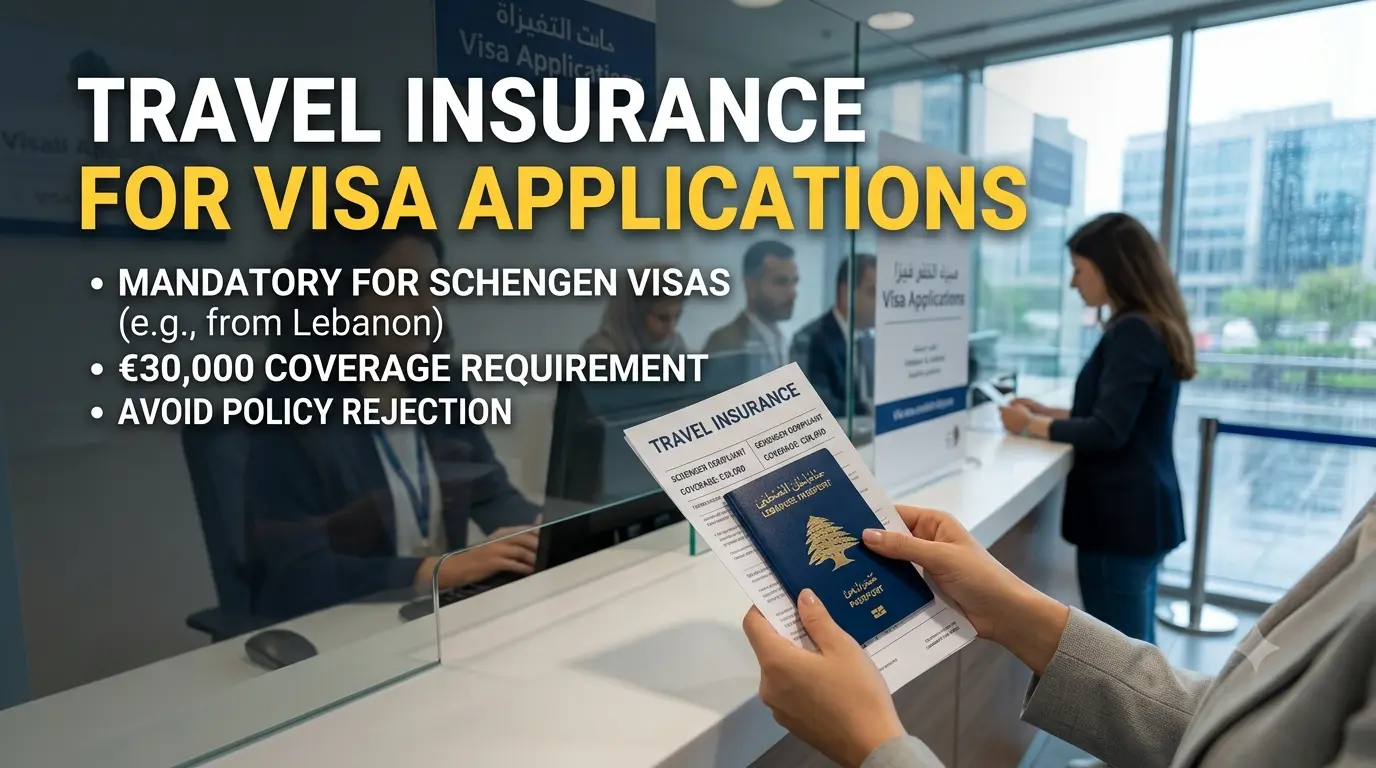
For Schengen visa applications, travel insurance isn’t optional — it’s a legal requirement under EU Regulation 810/2009, the Schengen Visa Code. Every short-stay Schengen applicant must submit proof of medical insurance meeting specific minimum standards before a visa can be issued, making this one of the clearest examples of travel insurance for visa application purposes actually having legal teeth behind it rather than being a soft recommendation.
Destinations Where It’s Recommended, Not Required
The UK’s Standard Visitor visa process doesn’t require proof of travel insurance as part of the application itself, though it remains a sensible precaution given the cost of private healthcare there. Several UAE visa categories increasingly bundle basic coverage directly into the visa fee, which is a more recent shift rather than a fixed universal rule, so it’s worth confirming what’s included for the specific visa category applied for rather than assuming coverage either way.
The Schengen €30,000 Minimum Coverage Rule
What the Coverage Amount Actually Needs to Cover
The Schengen Visa Code requires a minimum of €30,000 in medical coverage, intended to cover emergency medical treatment, hospitalization, and repatriation — either medical evacuation or, in the worst case, repatriation of remains. This figure is set at the EU level and applies uniformly across all Schengen missions, regardless of which specific country’s consulate is processing the application.
Geographic and Duration Coverage
Beyond the coverage amount, the policy must be valid across all Schengen member states for the entire duration of the intended stay — not just the primary destination country. A policy that only covers France, for instance, wouldn’t satisfy a Schengen application even if the applicant is specifically visiting France, since the requirement is tied to the whole Schengen Area rather than a single country.
Common Reasons a Visa Insurance Policy Gets Rejected
Coverage Amount Just Under the Threshold
A policy sitting just below the €30,000 minimum, whether from a currency conversion mismatch or a plan that simply falls short, is one of the most avoidable rejection triggers. Confirming the exact euro-equivalent coverage rather than relying on a rounded dollar figure is worth the extra few minutes before submission.
Deductibles and Excess Clauses
Some consulates specifically reject policies that include a deductible or excess clause, expecting instead full coverage with no out-of-pocket contribution from the traveler in a medical emergency. This varies by mission, which makes it worth confirming rather than assuming a deductible-free policy is universally required, even though it’s the safer default to choose.
Missing Repatriation Wording
A policy that covers general medical treatment but doesn’t explicitly mention repatriation — either medical evacuation or repatriation of remains — can be rejected even if the overall coverage amount is sufficient, since repatriation coverage is a specifically named requirement under the Schengen rules rather than an assumed inclusion.
Wrong Policy Type Submitted
Occasionally, applicants submit a general “travel insurance” certificate when a consulate specifically expects a “health insurance” or medical-specific policy for a longer-stay visa category, or vice versa. Confirming which exact policy type the destination consulate expects, rather than assuming any travel insurance product qualifies, avoids this particular mismatch.
Choosing a Policy That Meets Visa Requirements
Local Lebanese Providers vs. International Insurers
Schengen rules don’t require the policy to come from a European insurer specifically — many embassies accept policies from local or regional providers, provided the coverage terms meet the Schengen rules and claims are recoverable within a Schengen state. For Lebanese applicants, this means a locally purchased policy can work, as long as it’s explicitly structured to meet the €30,000, no-deductible, full-Schengen-area standard rather than a generic travel policy that happens to be available locally.
Getting an Embassy-Accepted Certificate
Most insurers offering Schengen-compliant policies provide a specific visa certificate or letter stating the coverage amount, duration, and Schengen-area validity in the format consulates expect to see. Requesting this certificate directly, rather than a standard policy summary, is the more reliable way to ensure the travel insurance for visa application purposes actually matches what the consulate requires.
What Compliant Travel Insurance Typically Costs?
Price Ranges for Schengen-Compliant Policies
Policies meeting the Schengen minimum requirements are generally inexpensive relative to the trip cost overall, often running in the range of a few dollars per day for a standard-length trip, with pricing varying by traveler age, trip length, and whether a deductible-free option is selected. Because the cost of compliant travel insurance for visa application purposes is relatively modest compared to flights and accommodation, there’s rarely a strong financial reason to choose a policy below the compliant standard just to save a small amount.
Age and Pre-Existing Condition Considerations
Older travelers or those with pre-existing medical conditions sometimes need to select a higher tier of coverage or a policy specifically underwriting pre-existing conditions, since a standard entry-level policy may exclude or limit coverage for conditions the traveler already manages. This is worth flagging during the application process rather than discovering a coverage gap only if a claim is needed.
Family and Group Travel Insurance for Visa Applications
Individual Policies vs. Family Plans
Most insurers offering visa-compliant coverage allow either individual policies for each family member or a single family plan covering everyone traveling together, provided the family plan still meets the per-person minimum coverage requirement for each individual named on it. For a family Schengen application, each person’s name and coverage details still typically need to appear clearly on the certificate submitted with their individual visa file.
Group Bookings for Business or Leisure Travel
Larger groups traveling together — a corporate delegation or an extended family trip — can often be insured under a single group policy, which can simplify the paperwork considerably compared to arranging separate policies for each traveler, as long as the certificate clearly breaks out each individual’s coverage to satisfy each person’s visa application.
Travel Insurance Beyond the Visa Requirement
Why It’s Worth Having Even Where Not Mandatory?
Even for destinations that don’t legally require proof of insurance — the UK being the clearest example among Lebanese travelers’ most common destinations — the underlying protection still matters. Medical costs abroad, particularly in destinations with expensive private healthcare systems, can be substantial, and a policy purchased solely to satisfy a visa requirement often provides genuinely useful coverage well beyond the paperwork itself.
Matching Coverage to the Actual Trip
Because visa-mandated minimums are a floor rather than a recommendation tailored to any specific traveler’s situation, it’s worth considering whether a higher coverage amount, trip cancellation protection, or coverage for pre-existing conditions makes sense for the specific trip, family composition, or destination — rather than defaulting to the bare minimum simply because it satisfies the visa checklist.
When to Buy Travel Insurance Relative to the Visa Application?
Before Submitting, Not After
Because the insurance certificate is a required document at the time of submission for Schengen applications, the policy needs to be purchased before the appointment, not arranged afterward as a formality. This is a common point of confusion for first-time applicants who assume insurance is something to sort out once the visa is already approved.
Adjusting Dates if the Trip Changes
If travel dates shift after a policy has already been purchased, the certificate typically needs to be updated or reissued to reflect the new dates, since a policy covering the wrong date range technically doesn’t satisfy the original requirement even if it was compliant when first issued. Keeping the insurance certificate aligned with the latest confirmed travel dates avoids a mismatch that could otherwise surface during a border check.
Frequently Asked Questions
Yes. It’s a legal requirement under EU Regulation 810/2009, requiring a minimum of €30,000 in medical coverage valid across the entire Schengen Area for the full duration of the trip.
No, the UK’s Standard Visitor visa process doesn’t require proof of travel insurance for a visa application, though it remains a sensible precaution given the cost of private healthcare in the UK.
A minimum of €30,000, covering emergency medical treatment, hospitalization, and repatriation, valid across all Schengen member states for the trip’s full duration.
Yes, as long as the policy is specifically structured to meet the €30,000, full-Schengen-area, no-deductible standard rather than being a generic travel policy that happens to be sold locally.
Common triggers include deductible or excess clauses, missing explicit repatriation wording, or a policy type mismatch (general travel insurance versus health-specific insurance) for certain visa categories, even when the overall coverage figure is sufficient.
Need help finding travel insurance for a visa application that meets embassy requirements? Request a tailored quote from Fayad Travel and we’ll help you get it right the first time.