
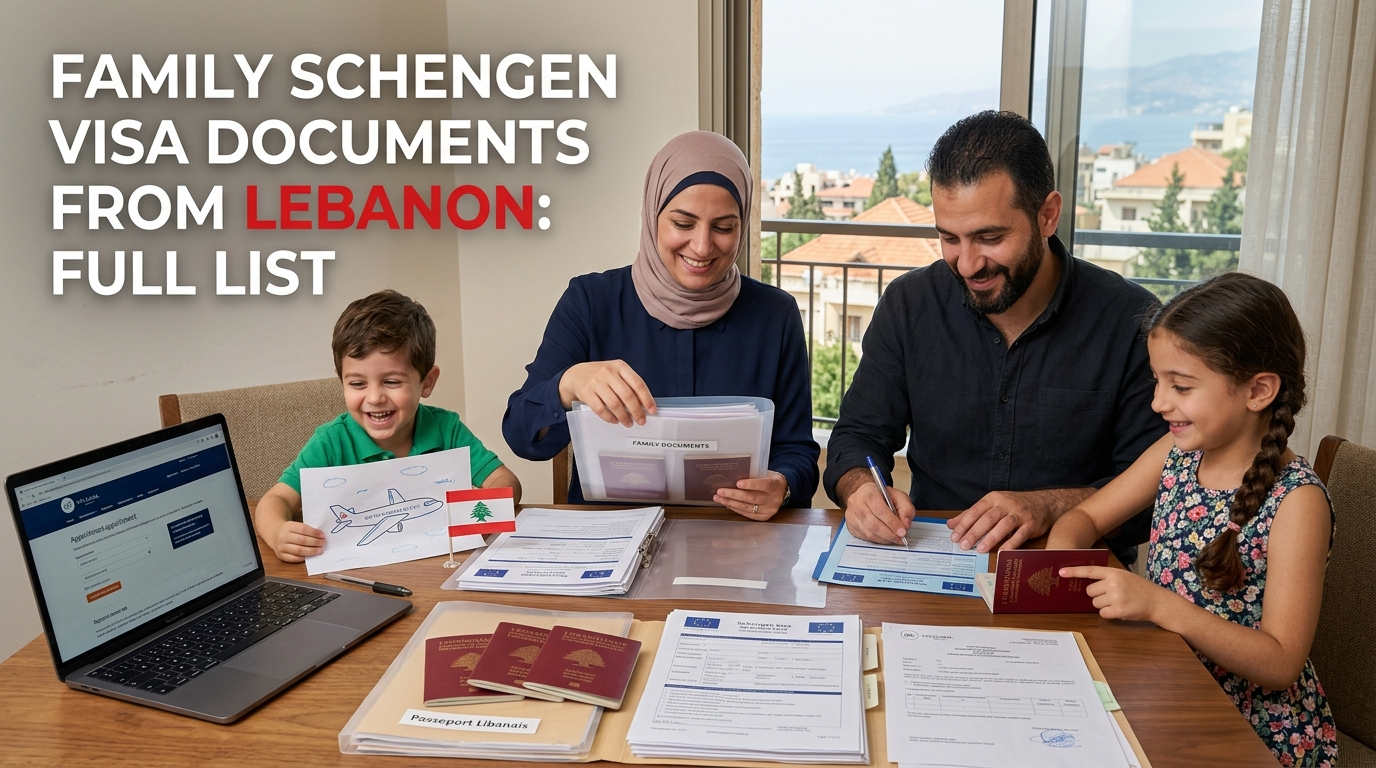
A family Schengen application involves genuinely more paperwork than a solo traveler’s file, and most of the added complexity comes from a detail that catches parents off guard: Lebanon has its own exit requirements for minors, entirely separate from whatever the destination consulate asks for. Getting both sets of requirements right the first time is what keeps a family trip on schedule rather than delayed by a missing signature discovered days before departure. This guide walks through the complete family Schengen visa documents Lebanon applicants need to gather, covering both the Lebanese exit side and the consulate’s own requirements for children — so nothing gets discovered missing the week before departure.
Lebanon’s Own Exit Requirements for Minors
Why This Step Exists Separately from the Visa?
Before a Schengen visa document checklist even comes into play, Lebanese law requires its own process for minors leaving the country, administered through General Security rather than the destination’s consulate. This means a family isn’t just preparing documents for the Schengen application — they’re also completing a distinct Lebanese exit authorization step that has nothing to do with which European country the family is visiting.
The Consent and Age-Based Process
Both parents are required to sign a consent letter at the mokhtar’s (mayor’s) office authorizing the minor’s travel, which is then conveyed to General Security. The exact process varies slightly by age: children aged 7 or younger accompany their parents to the mokhtar’s office but don’t need to appear at General Security itself, while children between 7 and 15 need to be present at General Security along with their parents. If one parent can’t be present for the General Security step, the other can attend alone provided both parents have already signed the consent letter at the mokhtar’s office.
What the Schengen Consulate Requires for Children?
Core Documents for Every Child
Separate from Lebanon’s exit process, the destination consulate’s own checklist for a minor typically includes the child’s birth certificate (or an extract confirming parentage), the child’s own passport, and — if the child isn’t traveling with both parents — a parental consent letter from the parent who isn’t accompanying the trip.
When Both Parents Are Traveling Together?
If both parents are traveling with the child, the requirement is generally lighter, since both custodial parents being present addresses the core concern consulates are checking for. Even so, some consulates still request a birth certificate confirming the parent-child relationship as standard practice.
When Only One Parent Is Traveling?
This is where documentation gets more involved. If a child travels with only one parent, most Schengen consulates expect a signed consent letter from the non-traveling parent, along with a copy of that parent’s passport or ID. Depending on the specific consulate, this letter may need to be notarized, legalized, or signed in person at the application centre — a detail worth confirming directly with the relevant consulate (TLScontact, VFS Global, or BLS International in Beirut) before the appointment, since requirements vary by mission.
Sole Custody Situations
Where one parent holds sole legal custody, documentation proving that custody arrangement — a court order or equivalent legal document — generally replaces the need for the other parent’s consent letter. This is a more sensitive documentation path and benefits from being prepared well in advance, ideally with input from whoever handled the original custody arrangement.
Financial and Itinerary Documents for the Whole Family
Proof of Funds
Consulates typically expect financial documentation covering the whole family’s trip, not just the applying adult — bank statements, an employer letter, and, where relevant, evidence of who is funding the children’s portion of the trip if that differs from a standard shared-income household.
Accommodation and Flight Details
A complete family application generally includes a shared itinerary — flight reservations and confirmed or refundable accommodation covering the full family group — submitted consistently across every family member’s individual application file, since mismatched dates or addresses between family members’ applications can trigger delays.
Common Mistakes That Delay Family Applications
Treating the Two Processes as One
The most frequent mistake is assuming the Lebanese General Security exit process and the Schengen consulate’s document checklist are the same thing, or that completing one automatically satisfies the other. They’re entirely separate systems run by different authorities, and a family that only prepares the Schengen half of the family Schengen visa documents Lebanon requires can still be held up at the airport if the General Security step wasn’t completed beforehand.
Inconsistent Details Across Family Members’ Files
A second common issue is small inconsistencies between family members’ individual application files — a slightly different spelling of an address, mismatched travel dates, or a hotel booking listed under one parent’s file but not the children’s. Consulates reviewing family applications together tend to notice these discrepancies quickly, and resolving them after submission takes considerably longer than getting the details aligned beforehand.
Outdated or Unsigned Consent Letters
Consent letters that are undated, missing a signature, or based on an outdated template that doesn’t match the specific consulate’s format are another recurring source of delay. Confirming the exact format expected — some consulates require notarization, others accept an in-person signature at the appointment — before finalizing the letter avoids a resubmission cycle.
A Family Schengen Visa Document Checklist Summary
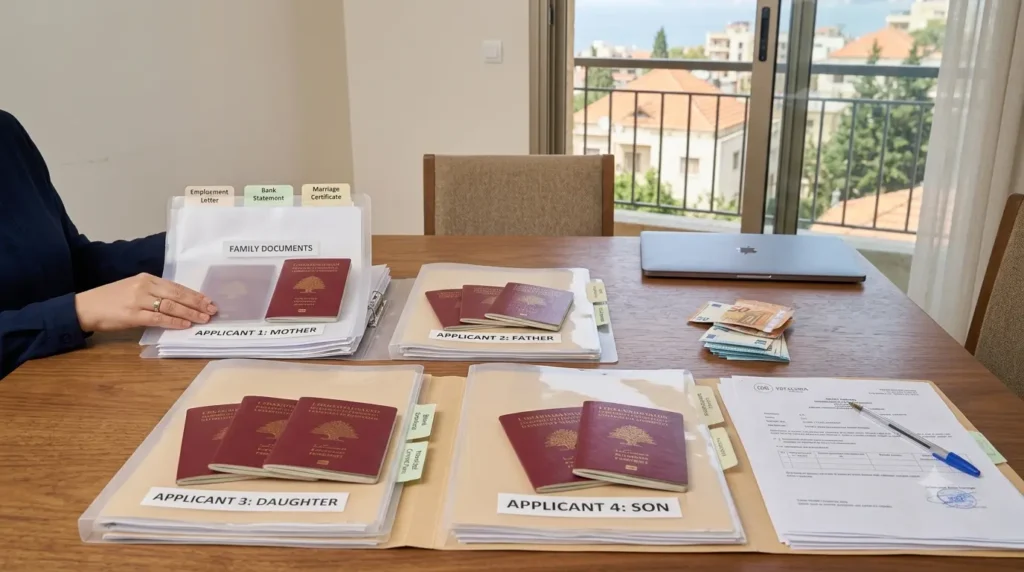
Pulling everything together into a single reference makes the full set of family Schengen visa documents Lebanon families need easier to check off before the appointment:
For Every Family Member
Every applicant, adult or child, needs their own valid passport, a passport-style photo, a completed application form, and financial or itinerary documents consistent with the rest of the family’s file.
Additional Documents for Children Specifically
Children additionally need a birth certificate, evidence of Lebanon’s General Security exit clearance where applicable, and — depending on who’s traveling with them — a consent letter from any non-traveling parent or documentation of sole custody.
Coordinating Timing Between Lebanon’s Process and the Consulate Appointment
Sequencing the Steps Correctly
Because the General Security step and the Schengen appointment run on separate tracks, families get the smoothest result by starting the Lebanese exit process first, or at minimum in parallel, rather than assuming it can be squeezed in right before the visa appointment. This sequencing question is one of the most common points of confusion families run into when assembling family Schengen visa documents Lebanon consulates expect to see submitted as a complete, consistent set.
What to Confirm Before Booking Flights?
Before locking in non-refundable flights, it’s worth confirming that both the General Security clearance and the consulate’s document checklist are fully in hand for every child on the trip, since a gap in either one can affect the family’s ability to travel as planned even if the adults’ documents are fully approved.
Practical Tips for Submitting a Family Application
Applying Together at the Same Appointment
Most consulates allow — and generally prefer — family members to submit their applications together in a single appointment session, which keeps the file consistent and reduces the chance of mismatched details between parents’ and children’s paperwork.
Building in Extra Time for the Mokhtar and General Security Steps
Because Lebanon’s own minor exit process happens before or alongside the Schengen appointment, it’s worth treating it as its own line item in the planning timeline rather than assuming it can be handled the same week as the visa appointment. Scheduling the mokhtar’s office visit and, where required, the General Security appearance a few weeks ahead of the visa appointment avoids a last-minute scramble.
Frequently Asked Questions
As part of the broader set of family Schengen visa documents Lebanon consulates expect, a child specifically needs a birth certificate confirming parentage, their own passport, and — if not traveling with both parents — a consent letter from the non-traveling parent, in addition to Lebanon’s own General Security exit requirements for minors.
Yes. Both parents must sign a consent letter at the mokhtar’s office, and depending on the child’s age, the child and parents may also need to appear at General Security before departure — a step separate from the Schengen visa application itself.
Most consulates require a signed consent letter from the non-traveling parent, along with a copy of that parent’s ID or passport; some missions require the letter to be notarized or signed in person.
Legal documentation proving sole custody generally replaces the need for the other parent’s consent letter, though it’s worth confirming the specific consulate’s requirements for how that documentation should be presented.
Together, where possible. Submitting the whole family’s applications in one appointment session keeps supporting documents consistent and reduces the risk of mismatched details across individual files.
Planning a family trip to Europe and want the paperwork handled correctly? Request a tailored quote from Fayad Travel and we’ll help you prepare both the Lebanese exit documents and the Schengen application.