

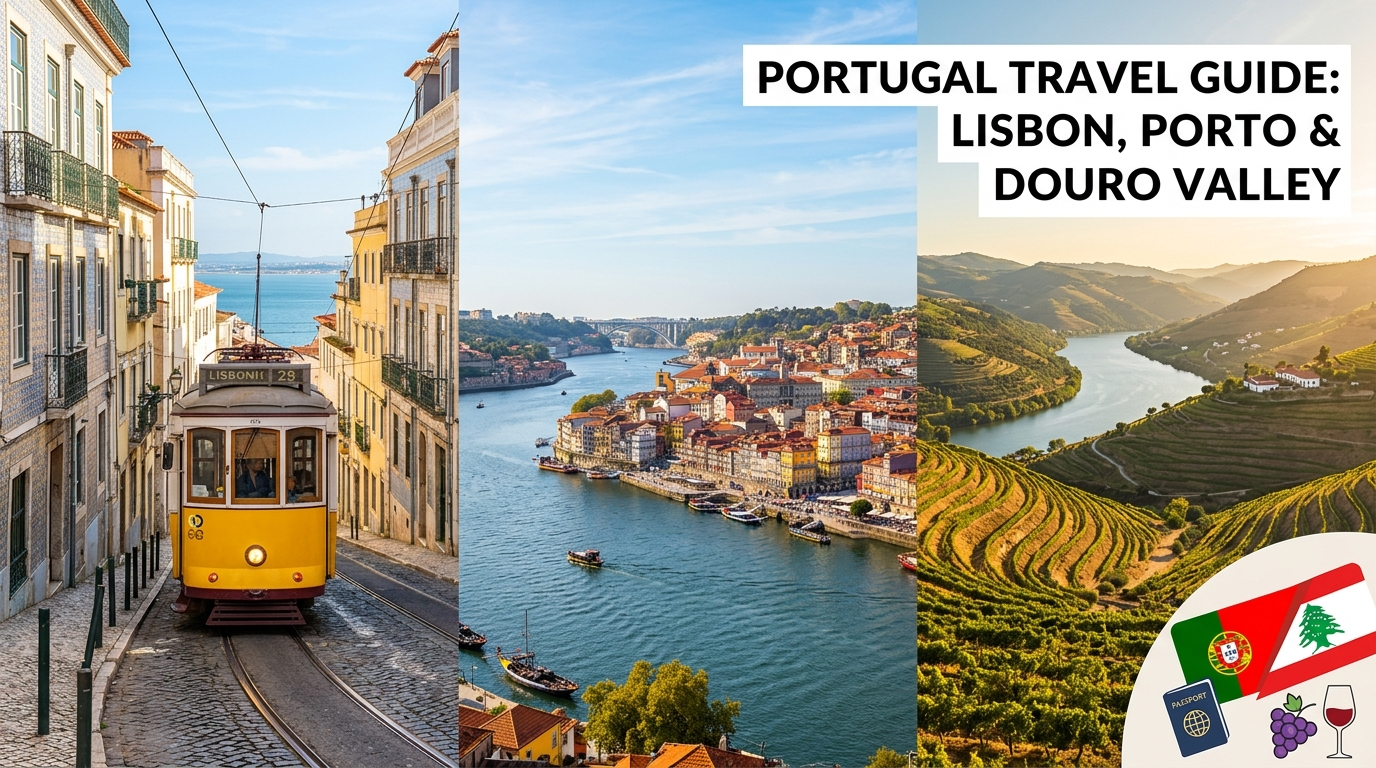
Portugal has quietly become one of Europe’s most talked-about destinations over the past decade, and for good reason — Lisbon’s hillside streets and pastel facades, Porto’s centuries-old port wine cellars along the river, and the Douro Valley’s dramatically terraced vineyards together offer a genuinely different European trip than the more heavily trafficked routes through Italy or France. This Portugal travel guide covers how to structure a trip across all three, along with the flight and visa details Lebanese travelers need to know — enough to move from admiring photos of Sintra’s palaces to actually booking the trip.
Getting There and Entry Requirements
Flight Routing from Beirut
There’s no direct flight from Beirut to Lisbon or Porto, so most itineraries route through a European hub, with total journey time (including the connection) typically running eight hours or more depending on the specific routing and layover length.
Visa Requirements
Portugal is part of the Schengen Area, so Lebanese travelers need a Schengen visa, following the same process and realistic appointment-to-decision timeline covered in our broader Schengen guides — worth starting three to four months ahead of a planned trip given Beirut’s appointment-booking variability.
Budgeting for a Portugal Trip
Value is one of the genuine strengths this Portugal travel guide can highlight, since the country delivers strong European travel at a noticeably lower cost than several of its neighbors.
Typical Costs Compared to Other European Destinations
Portugal remains one of Western Europe’s better-value destinations, with comfortable four- and five-star hotels typically running $100 to $250 per night in Lisbon and Porto, meaningfully lower than comparable properties in Italy, France, or Switzerland covered elsewhere on this site.
A Realistic Total for an 8-Day Trip
Combining flights, hotels across Lisbon and Porto, the Sintra and Douro Valley day trips, and dining, a comfortable 8-day Portugal trip for a couple typically totals $3,000 to $5,500, making it one of the more accessible European destinations in this guide.
Best Time to Visit Portugal
Spring and Autumn Advantages
Late April through June and September through October offer Portugal’s most comfortable temperatures for exploring Lisbon and Porto’s hillier neighborhoods on foot, avoiding both summer’s peak heat and crowds.
Douro Valley Harvest Season
September brings the Douro Valley’s grape harvest, adding a seasonal layer to a wine country visit similar to Georgia’s Rtveli, with several quintas welcoming visitors to observe or even participate in harvest activities during this specific window.
Lisbon: Hills, Trams, and Riverside Charm
Any Portugal travel guide has to start in Lisbon, since it’s almost always the entry point and anchor of a first visit.
The Alfama District and Tram 28
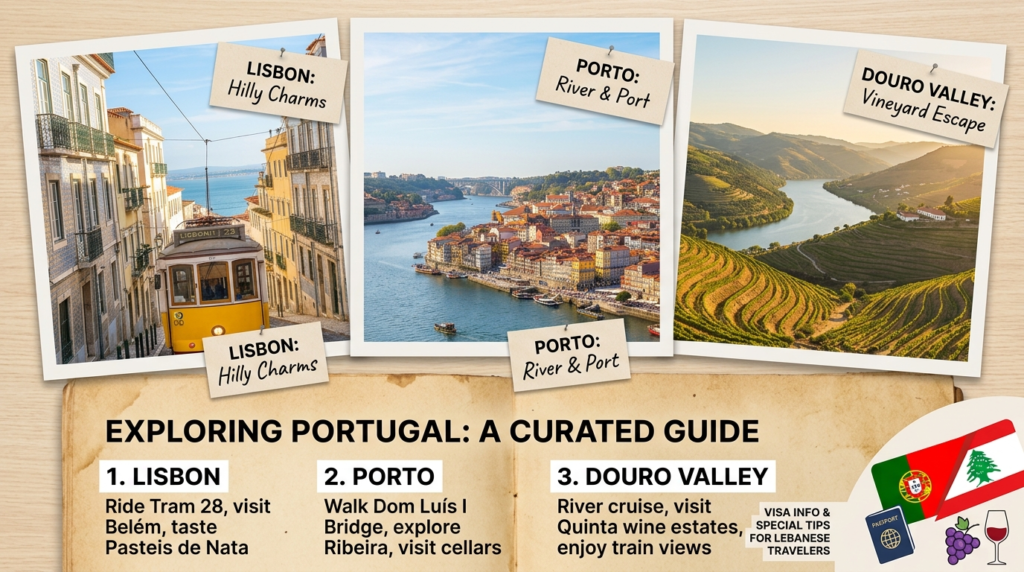
Alfama, Lisbon’s oldest neighborhood, is best explored on foot through its narrow, winding streets, though the historic Tram 28 route offers a classic (if often crowded) way to cover the district’s steepest climbs without the walk.
Belém and the Age of Discoveries
Belém, along Lisbon’s riverfront, houses the Jerónimos Monastery and the Belém Tower, both UNESCO World Heritage Sites connected to Portugal’s Age of Discoveries maritime history, and is also home to the original Pastéis de Belém bakery, considered by many the definitive version of Portugal’s famous custard tart.
Day Trip to Sintra
Sintra, roughly forty minutes from central Lisbon, offers a dramatically different landscape of colorful palaces and lush forest, with the Pena Palace as its most photographed landmark — a strong full-day addition to any Lisbon-based stay.
Portugal for Family Travel
Families researching this Portugal travel guide will find the country offers a genuinely manageable European trip with real kid appeal.
What Works Well for Families?
Lisbon’s trams, Sintra’s fairy-tale palaces, and Porto’s riverside walks all offer genuine appeal to children, while the country’s compact size and relatively easy logistics between cities make it a manageable European family trip compared to some more sprawling itineraries.
Pacing Considerations
Lisbon and Porto’s steep, hilly streets can be tiring for young children over a full day of walking, so building in tram rides, funicular options, and café breaks helps keep the pace family-friendly, particularly in Lisbon’s Alfama district.
Combining Portugal with Spain
A Natural Iberian Extension
Travelers with more time sometimes extend a Portugal trip into Spain, given the relatively short distances between Lisbon or Porto and cities like Seville or Madrid, creating a broader Iberian Peninsula itinerary for those with two weeks or more available.
Why Portugal Often Works as a Standalone Trip?
For most travelers, Portugal’s own combination of Lisbon, Porto, and the Douro Valley fills a comfortable week to ten days on its own, making a standalone Portugal trip a genuinely complete experience without needing Spain to round it out.
Porto: Port Wine and the Douro River
The second half of this Portugal travel guide shifts north to Porto, a city with a genuinely different character from Lisbon’s more cosmopolitan energy.
The Ribeira Waterfront
Porto’s Ribeira district, a UNESCO World Heritage Site along the Douro River, offers a dense concentration of colorful historic buildings, riverside restaurants, and views across to the port wine lodges of Vila Nova de Gaia on the opposite bank.
Port Wine Cellar Tours
Vila Nova de Gaia’s port wine cellars, several open for tours and tastings, offer a genuine introduction to how port wine is actually made and aged, with many cellars dating back centuries and still operated by the same historic wine houses.
Livraria Lello and Porto’s Architecture
Livraria Lello, one of the world’s most ornately decorated bookstores, has become a genuine Porto landmark in its own right, alongside the city’s broader collection of azulejo-tiled buildings and São Bento train station’s famous tiled entrance hall.
The Douro Valley: Portugal’s Wine Country
Any complete Portugal travel guide has to spend real time on the Douro Valley, since the wine region is arguably the single most distinctive landscape in the entire country.
Terraced Vineyards Along the River
The Douro Valley, a short drive or scenic train ride from Porto, is one of the world’s oldest demarcated wine regions, with steeply terraced vineyards climbing the river valley’s hillsides in a landscape genuinely unlike anywhere else in Portugal.
Wine Estate Visits and River Cruises
A day trip typically combines a visit to one or two quintas (wine estates) for tastings with either a scenic drive along the valley’s winding roads or a river cruise along the Douro itself, both offering different but equally striking perspectives on the terraced landscape.
Staying Overnight in Wine Country
Travelers with more time sometimes extend the Douro Valley visit into an overnight stay at one of the region’s wine estate hotels, trading a rushed day trip for a more relaxed, immersive wine country experience.
Shopping and Local Crafts
Azulejo Tiles and Ceramics
Portugal’s traditional azulejo tiles and broader ceramics tradition offer genuinely distinctive souvenirs, with dedicated shops in both Lisbon and Porto selling everything from small decorative tiles to full sets suitable for shipping home.
Port Wine to Bring Home
A bottle (or several) of port wine purchased directly from one of Vila Nova de Gaia’s historic cellars makes for an obvious and genuinely high-quality souvenir, often at better prices and selection than what’s available for export elsewhere.
Building a Portugal Itinerary
Pulling everything from this Portugal travel guide together into a bookable structure, a well-paced trip looks something like this:
A Sample 8-Day Route
A well-paced Portugal trip typically opens with three nights in Lisbon (including the Sintra day trip), continues with three nights in Porto (including the Douro Valley excursion), and closes with a final night back in Lisbon or Porto depending on flight routing home.
Adjusting for Shorter Trips
Travelers with less time can focus on Lisbon and Sintra alone for a shorter city-break trip, or compress the Porto and Douro Valley legs into a long weekend extension for travelers prioritizing the wine country experience specifically.
Portuguese Cuisine
Food is one of the more rewarding sections of any Portugal travel guide, since the country’s culinary identity extends well beyond the famous custard tart most travelers already know.
Pastéis de Nata and Beyond
Beyond the famous custard tart, Portuguese cuisine centers heavily on fresh seafood — particularly bacalhau (salt cod), prepared in dozens of regional variations — along with hearty regional stews and, of course, an extensive wine culture beyond just port.
Dining in Lisbon vs. Porto
Lisbon’s dining scene leans more internationally diverse and contemporary, while Porto’s food culture stays closer to traditional, hearty regional cooking — both worth experiencing as genuinely different sides of Portuguese cuisine rather than assuming one city represents the whole country.
Frequently Asked Questions
As this Portugal travel guide lays out, an eight-day trip combining Lisbon (with a Sintra day trip), Porto, and a Douro Valley wine country excursion covers Portugal’s signature experiences well, with shorter variations focusing on just Lisbon or just Porto also working well.
Yes, since Portugal is part of the Schengen Area, a Schengen visa is required, following the same process and realistic timeline as other Schengen destinations.
There’s no direct flight from Beirut to Lisbon or Porto, so most itineraries connect through a European hub, with total journey time typically eight hours or more depending on routing.
Yes — the terraced vineyards and wine estate tastings offer a genuinely distinctive landscape and experience, whether visited as a day trip or an overnight extension for travelers with more time.
Many travelers find the two cities genuinely complementary — Lisbon offers hillside charm and a more international dining scene, while Porto offers port wine culture and a more traditional, riverside character.
Ready to plan a Portugal trip covering Lisbon, Porto, and the Douro Valley? Speak with a Fayad Travel destination expert to build the right route for your dates.