


A trip involving grandparents, parents, and children together is a genuinely different planning exercise than a standard family holiday — the itinerary needs to work for a toddler’s nap schedule and a grandparent’s walking tolerance simultaneously, without either generation feeling like the trip was designed around someone else’s needs. This guide covers how to actually plan a multi-generational family trip Europe destinations can support well, from pacing and accommodation through to keeping everyone genuinely engaged — the kind of trip most generic family-travel content doesn’t address at all.
Why Multi-Generational Trips Need Different Planning?
Every genuinely successful multi-generational family trip Europe families take starts with acknowledging this basic truth: the same itinerary that delights one generation can exhaust another.
Competing Needs Within One Itinerary
A three-generation trip has to balance mobility considerations for older travelers, nap and meal schedules for young children, and enough variety and independence for the parents in between — a single-pace, single-style itinerary built for any one group rarely satisfies all three simultaneously.
The Value of Getting It Right
Done well, a multi-generational trip creates the kind of shared memory that a standard family holiday often doesn’t, precisely because it brings together people who don’t usually travel as a unit — which is exactly why the planning deserves more care than defaulting to a typical family itinerary and hoping it works for everyone.
Budgeting for a Multi-Generational Trip
Cost planning for a multi-generational family trip Europe itinerary involves more moving pieces than a standard family budget, given the range of ages and preferences involved.
Splitting Costs Across the Family
Multi-generational trips often involve more complex cost-sharing than a standard family holiday — some families split costs evenly per adult, others have the working generation cover a larger share, and agreeing on this structure before booking avoids awkward conversations once flights and hotels are already confirmed.
Where the Budget Typically Runs Higher?
Larger accommodation (multi-bedroom suites or connecting rooms), private guided tours rather than group tours, and more flexible, changeable flight bookings to accommodate different family members’ schedules all tend to push a multi-generational trip’s budget higher than an equivalent same-generation family trip.
Destinations Well-Suited to Multi-Generational Groups
Cities with Strong Accessibility
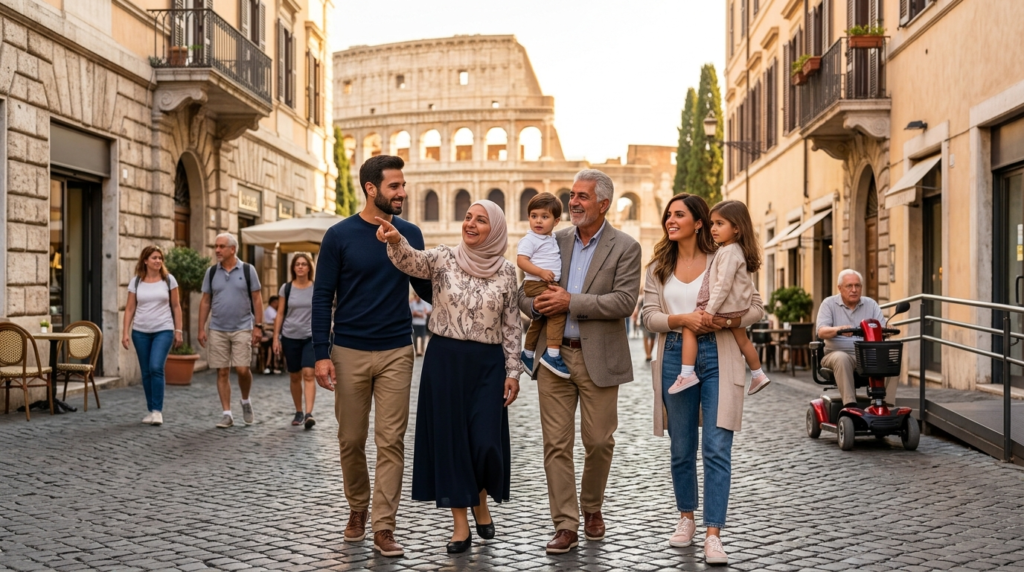
Cities with modern public transport, generally flat terrain, and well-maintained infrastructure — several Northern and Western European capitals fit this description — tend to work better for groups including older travelers than cities built primarily around steep, cobblestone historic centers.
Countryside and Resort-Style Options
Beyond city-based itineraries, a countryside villa stay or a resort-style base with on-site activities can work particularly well for multi-generational groups, since it reduces the daily transit burden and gives everyone a comfortable home base to return to between excursions.
Choosing a Destination That Works for Every Generation
Accessibility and Walkability Considerations
European cities vary considerably in how accessible they are for travelers with limited mobility — cobblestone streets, hilly terrain, and older buildings without elevators can turn an otherwise appealing city into a genuine challenge for grandparents, making it worth researching a destination’s general accessibility before committing.
Balancing Culture, Relaxation, and Activity
A destination offering a mix of cultural sightseeing (appealing to older generations), some active or adventurous options (for teenagers or younger adults), and simple relaxation time (for young children and tired grandparents alike) tends to serve a multi-generational group better than a destination built around one narrow type of experience.
Pacing the Itinerary for All Ages
Pacing is arguably the single most important variable in any multi-generational family trip Europe itinerary, more so than destination choice itself.
Fewer Stops, More Time at Each
Multi-generational itineraries generally work best with fewer destinations and more time at each one, rather than the fast-paced, city-a-day approach that might suit a group of able-bodied adults but exhausts both young children and older travelers.
Building in Rest Days
Scheduling at least one genuinely unstructured day within a longer trip gives everyone — especially grandparents and young children — a chance to recover, rather than treating every day as another full sightseeing itinerary.
Morning Activities, Afternoon Flexibility
Front-loading the day’s more demanding activities in the morning, when energy levels are highest across all generations, and leaving afternoons more flexible or optional, tends to produce a smoother daily rhythm than backloading the day’s main activity.
Accommodation for Multi-Generational Groups
Getting accommodation right is one of the more practical levers in any multi-generational family trip Europe planning process, since a poor room configuration can undermine an otherwise well-planned itinerary.
Connecting Rooms vs. Larger Suites
Depending on family size and preference, either connecting hotel rooms or a larger multi-bedroom suite or apartment rental can work well — the right choice depends on how much shared space versus private space each generation prefers during downtime.
Ground-Floor or Elevator Access
For any family member with mobility limitations, confirming ground-floor access or reliable elevator service at each accommodation is worth checking directly rather than assuming, particularly at older European properties that may not have been renovated with full accessibility in mind.
Kitchen Access for Flexible Meals
An apartment-style rental with kitchen access can be genuinely useful for a multi-generational group, allowing for flexible meal timing that accommodates a toddler’s earlier dinner alongside a grandparent’s dietary preferences, without requiring the whole group to coordinate around restaurant hours every night.
Activities That Work Across Generations
Guided Tours with Flexible Pacing
A private guided tour, rather than a fixed-pace group tour, allows the guide to adjust pacing in real time based on how the group is doing that day, which matters considerably more for a multi-generational group than for a same-age traveling party.
Built-In Downtime for Different Sub-Groups
Structuring at least part of each day so that, say, grandparents and young children can rest at the accommodation while parents and teenagers take a more active excursion, gives everyone a comfortable option without forcing the whole group through every single activity together.
Shared Meals as the Connecting Ritual
Even when daytime activities split by sub-group, keeping meals as a shared, unhurried ritual gives the trip its connective tissue — the moments most families actually remember from a multi-generational trip tend to be around the table rather than at any specific monument.
Setting Expectations Before the Trip
A Pre-Trip Family Conversation
Before booking, a candid family conversation about mobility limits, activity preferences, and budget expectations across generations prevents a lot of friction that otherwise surfaces mid-trip, when it’s much harder to adjust plans already in motion.
Agreeing on Flexibility in Advance
Establishing upfront that not every family member needs to join every activity — and that this is genuinely fine rather than a source of guilt — gives everyone permission to opt out of something that doesn’t suit them without derailing the group’s overall plans.
Sample Itinerary Structures That Work Well
A Single-Base City Trip
A trip based in one city for a full week, with day trips to nearby attractions rather than changing hotels every few days, minimizes the logistical burden of packing and moving accommodation — a genuinely underrated structure for a multi-generational family trip Europe planning should consider seriously.
A Slow Two-Region Trip
For families wanting more variety, splitting a two-week trip between just two regions — rather than the three or four a same-age adult group might tackle — still offers meaningful change of scenery without the exhausting pace of a fast multi-city tour.
Working with a Travel Advisor for a Multi-Generational Trip
Why This Type of Trip Benefits from Extra Coordination?
Given how many moving parts a multi-generational trip involves — varied mobility needs, flexible accommodation requirements, and activity options that need to work for several age groups simultaneously — working with an advisor experienced in this specific type of trip can meaningfully reduce the planning burden compared to a family attempting to coordinate everything independently.
Getting Honest Guidance on Destination Fit
An advisor familiar with specific destinations’ accessibility and pacing can offer more honest, practical guidance than general travel content, particularly around which cities or regions genuinely suit a group spanning several generations versus those that look appealing but prove difficult in practice.
Handling Visa and Health Considerations
Visa Applications Across Different Ages
Every family member, including elderly grandparents and young children, needs their own visa application for Schengen or UK destinations, and it’s worth building extra time into the process for older travelers who may need additional documentation around health insurance or existing medical conditions.
Travel Insurance for Older Travelers
Comprehensive travel insurance matters even more for a multi-generational trip, particularly given that some policies have different terms or exclusions for older travelers or those with pre-existing conditions — worth reviewing carefully rather than assuming a standard family policy covers everyone equally.
Frequently Asked Questions
A well-planned multi-generational family trip Europe itinerary should choose a destination that balances accessibility, culture, and relaxation; pace the trip with fewer stops and more downtime than a standard family trip; book accommodation that suits the group’s mobility and space needs; and build in flexible activity options so different sub-groups can opt in or out of specific excursions.
Cities and regions with strong accessibility, a genuine mix of cultural and relaxed activities, and manageable walking distances between sights tend to work best — it’s worth researching a specific destination’s accessibility before committing rather than assuming any major European city will suit older travelers equally.
Yes — building in at least one unstructured day within a longer trip helps both young children and older travelers recover, producing a smoother overall experience than a fully packed daily itinerary.
Either connecting hotel rooms or a larger multi-bedroom suite or apartment rental can work well, depending on how much shared versus private space the group prefers, with ground-floor or elevator access worth confirming for any family member with mobility limitations.
It’s worth reviewing policy terms carefully, since some travel insurance has different exclusions or requirements for older travelers or those with pre-existing conditions, rather than assuming a standard family policy covers everyone equally.
Planning a family reunion or multi-generational trip to Europe? Request a tailored quote from Fayad Travel and we’ll help you build an itinerary that genuinely works for every generation.