
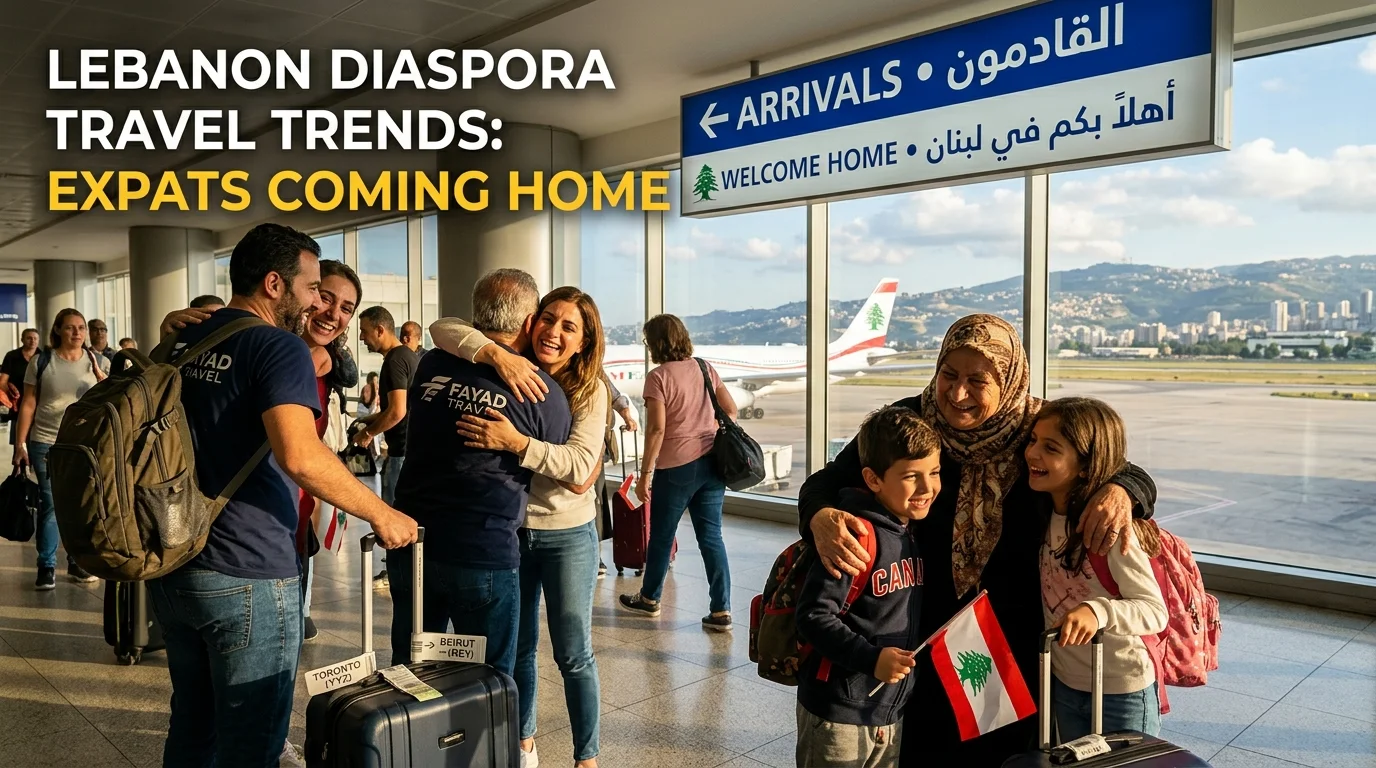
At Fayad Travel, the pattern has become hard to miss over the past couple of planning seasons: more of our diaspora clients are booking trips home, and more of them are staying longer once they arrive. Lebanese diaspora travel trends have been shifting in a direction that goes beyond the usual summer visit to see family — the motivations, trip lengths, and planning patterns we’re seeing from expat travelers in 2026 look noticeably different from a few years ago.
This piece shares what we’re observing on the ground, from the inquiries we handle daily, about why more expats are returning to Lebanon in 2026 and what that’s actually looking like in practice.
What We’re Seeing From Diaspora Clients This Year?
Trends in diaspora travel rarely show up as a single dramatic shift — they show up as a steady change in the kinds of requests an agency handles week after week. For us, that’s meant a noticeable rise in multi-week stays, more inquiries tied to specific family milestones, and more expats asking us to help plan a trip for extended family rather than just booking a single flight and figuring out the rest on arrival.
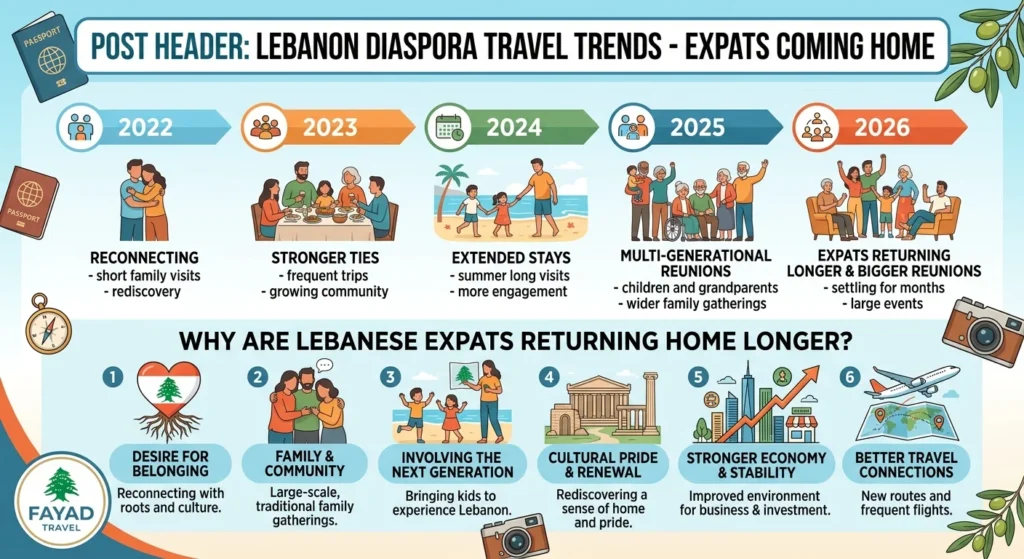
Summer remains the peak season, but shoulder-season bookings are growing
Multi-week stays increasingly replacing shorter one- or two-week visits
Multi-gen trips bringing children or grandchildren to Lebanon for the first time
What’s Driving the Shift?
Remote and Hybrid Work Changing Trip Length
For expats whose jobs allow remote work, a visit to Lebanon no longer has to be squeezed into a fixed vacation window. We’ve increasingly fielded requests from clients planning to work remotely from Lebanon for several weeks at a time, blending genuine time with family alongside a normal work schedule — a pattern that simply wasn’t common even a handful of years ago.
A New Generation Wanting to Connect With Their Roots
Many of our diaspora clients are now planning trips specifically to introduce children or grandchildren, born and raised abroad, to Lebanon for the first time — not just to visit relatives, but to actually experience the culture, food, and places their parents or grandparents describe. These trips tend to be planned with more intention than a typical family visit, often including heritage sites, hometown visits, and time with extended family who the younger generation has never met in person.
Milestone Events Drawing Larger Groups Home
Weddings, anniversaries, and family reunions continue to be one of the strongest pulls for diaspora travel, and we’re seeing these events draw larger groups than in past years — entire branches of extended family coordinating trips around a single occasion, which has made group logistics and multi-family itinerary planning a bigger part of our work than it used to be.
Direct Flight Access Making the Decision Easier
Flight routing and connection options to Beirut directly affect how easy it is for expats to decide on a trip home. Where direct or more convenient connecting routes exist from a diaspora hub, we consistently see higher interest and faster booking decisions compared to routes requiring longer, less convenient connections.
How These Trends Are Shaping Trip Planning?
| Trend | What It Means for Planning |
|---|---|
| Longer stays | More interest in blending work, leisure, and extended family time |
| First-time younger visitors | Itineraries built to introduce heritage and culture, not just visit relatives |
| Larger milestone gatherings | More demand for group logistics and multi-family coordination |
| Flight access sensitivity | Booking decisions move faster when convenient routing exists |
“The trips we’re planning now aren’t just visits home — for a lot of clients, they’re introductions, for a generation that’s never actually stood in the place their family talks about.”
What This Means If You’re Planning a Return Trip?
- If you’re planning a longer stay, think through logistics beyond flights — local transport, accommodation, and connectivity for remote work if relevant
- For first-time visits by children or grandchildren, consider building in heritage sites and hometown visits, not just family time
- For milestone events drawing a larger group, start group logistics planning earlier than you would for a solo trip
- Check routing options early, since convenient connections can meaningfully affect both cost and overall trip ease
Observations here reflect patterns in client inquiries handled by Fayad Travel and are not a substitute for independently reported travel statistics.
Why This Trend Is Worth Planning Around, Not Just Noting?
A diaspora trip that’s grown in scope — longer, bigger, more intentional — benefits from the same kind of planning a complex international trip would get from any other traveler. Multi-week stays, multi-family coordination, and first-time cultural introductions all have more moving parts than a quick family visit, and getting ahead of that planning tends to make the actual trip feel far less like logistics and far more like the homecoming it’s meant to be.
Frequently Asked Questions
Several factors appear to be contributing: remote work flexibility allowing longer stays, a new generation wanting to connect with their heritage, and larger milestone events drawing bigger family groups home.
Based on what we’re seeing in client inquiries, multi-week stays are becoming more common, particularly among expats able to work remotely during their visit.
Consider building the itinerary around heritage sites and hometown visits alongside family time, so the trip becomes a genuine introduction to their roots rather than just a visit to relatives.
Yes — more convenient connections to Beirut from diaspora hubs consistently correlate with faster booking decisions and higher interest in our experience.
Yes — we regularly help diaspora families plan longer stays, multi-family group logistics, and heritage-focused itineraries for returning expats.
Planning a trip home to Lebanon?
Read the full guide and speak to a Fayad Travel destination expert to plan your visit.Speak to a Destination Expert