
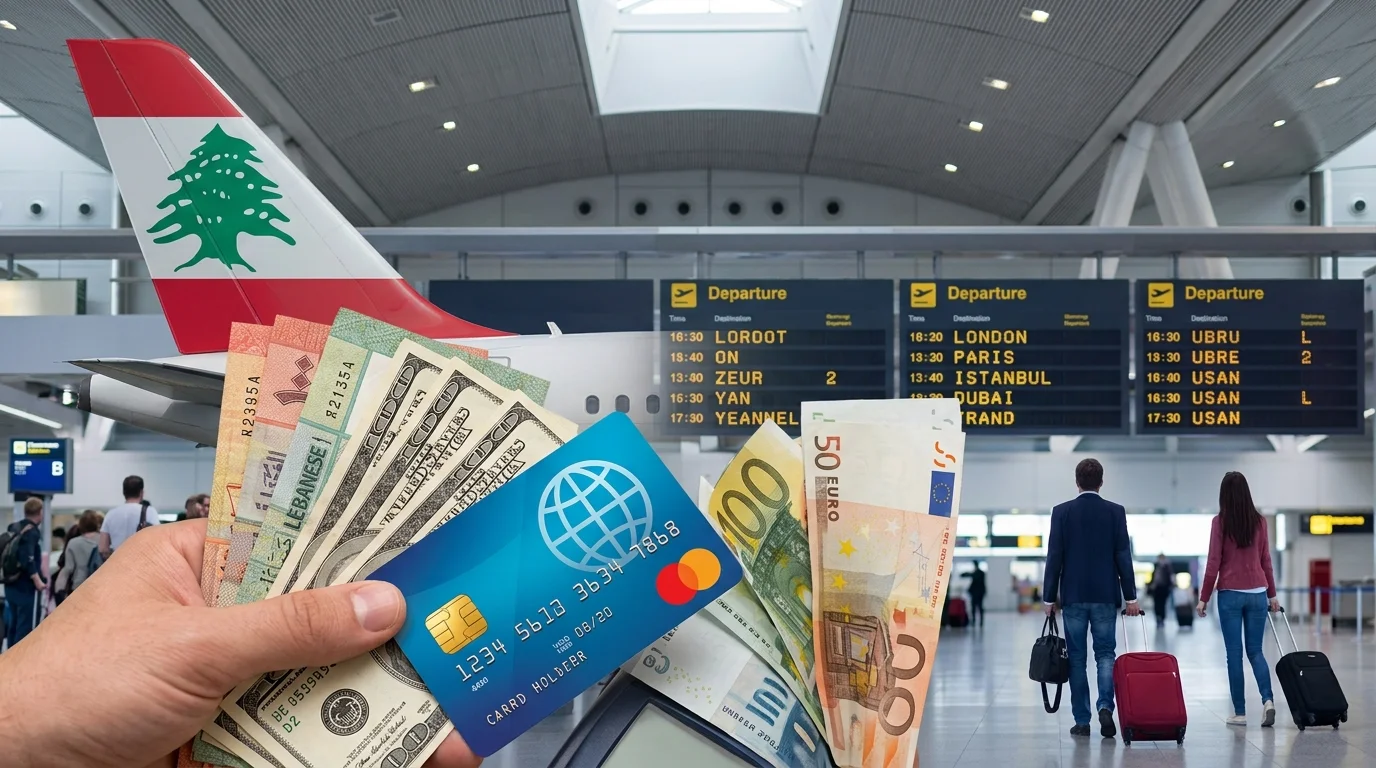
Every Lebanese traveler eventually asks the same question before a trip abroad: should I carry cash, or rely on cards? The honest answer is both — but knowing the right mix, and understanding what each one costs you in fees along the way, is what separates a traveler who spends comfortably from one who’s quietly losing money at every ATM and checkout. This money guide for travel abroad breaks down exactly how to think about currency, cards, and cash before you leave Lebanon.
Because Lebanon’s banking and currency environment is distinct from most destinations, the usual “just bring your card” advice given to travelers from other countries doesn’t always translate cleanly. This guide is built specifically around that gap.
Why This Question Matters More for Lebanese Travelers?
Card acceptance, exchange rate fees, and ATM access all vary significantly by destination, and travelers arriving from Lebanon often face a different starting point than travelers from countries with more standardized international banking relationships. Getting the cash-and-card mix right before departure avoids two common failure modes: carrying too much cash and taking on unnecessary risk, or relying entirely on cards and discovering a destination that expects cash for half of everyday spending.
1–3% typical foreign transaction fee charged on many card purchases abroad
2–3 payment methods recommended as a minimum for any international trip
Day 1 when travelers most often need emergency cash — on arrival, before finding a bank
Understanding Currency Exchange Before You Travel
Where You Exchange Money Changes What It Costs?
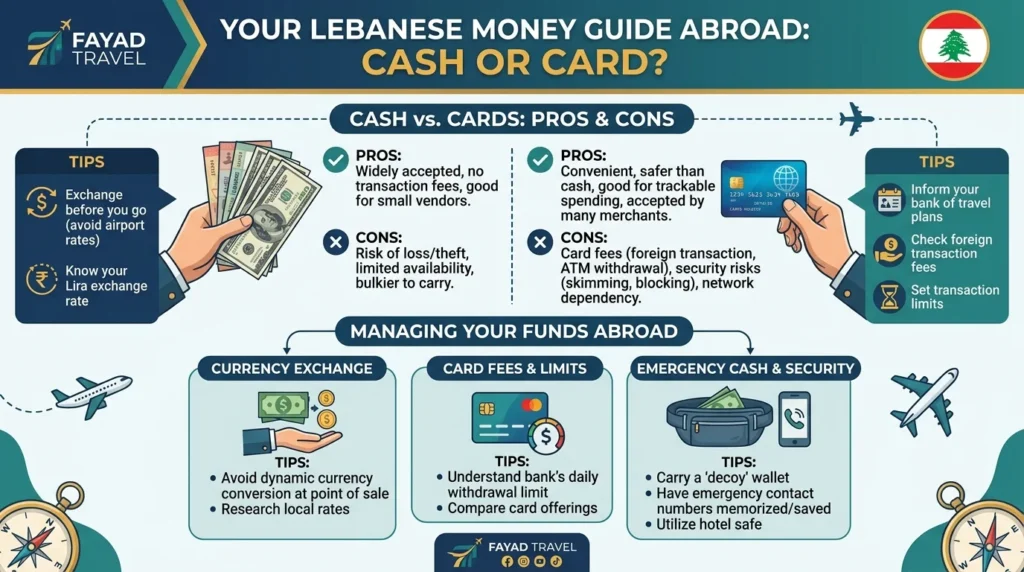
Exchange rates and fees vary widely depending on where the transaction happens. Airport currency exchange counters are convenient but almost always offer the least favorable rates, since they’re pricing for convenience rather than competition. A local bank or a reputable exchange service, arranged before departure or shortly after arrival away from the airport, typically offers meaningfully better rates.
Carrying Some Cash From Home Is Still Worth It
Arriving with a modest amount of the destination’s currency, exchanged in Lebanon or withdrawn shortly before departure, covers the first few hours abroad — a taxi, a meal, a tip — before you’ve had a chance to locate a bank or ATM at the destination. This isn’t about carrying large sums; it’s about not being stranded without any usable currency the moment you land.
Using Cards Abroad: What to Check Before You Leave
Foreign Transaction Fees Add Up Quietly
Many cards charge a foreign transaction fee on every purchase made outside the home country, typically a percentage of each transaction. It’s a small number per purchase, but across a week-long trip with dozens of transactions, it becomes a real cost. Checking this fee before departure — and considering a card without one, if available — is one of the simplest ways to reduce total trip cost.
Card Acceptance Isn’t Universal
Even in destinations with high card usage, cash still dominates certain situations: small vendors, local markets, tips, and some rural or less touristed areas. Assuming a card will work everywhere is one of the more common planning mistakes, particularly outside major cities.
Notify Your Bank Before You Travel
International purchases that don’t match a traveler’s usual spending pattern can trigger a fraud flag, sometimes freezing the card mid-trip. A quick notification to your bank before departure, or activating a travel notice through your banking app, prevents this from becoming an inconvenient surprise at a checkout counter abroad.
Cash vs. Card: A Practical Comparison
| Factor | Cash | Card |
|---|---|---|
| Acceptance | Works everywhere, including small vendors | Wide but not universal — check destination norms |
| Fees | Exchange rate spread, ATM withdrawal fees | Foreign transaction fee per purchase |
| Security risk | Loss or theft is unrecoverable | Losses can often be disputed or reversed |
| Convenience | Immediate, no dependency on networks | Faster checkout, easier to track spending |
“The travelers who manage money best abroad aren’t the ones who pick cash or cards — they’re the ones who know exactly when to use each.”
Planning for Emergency Access to Cash
Even well-prepared travelers occasionally need cash they didn’t plan for — a lost wallet, an unexpected expense, or a destination where cards simply aren’t accepted where you need them to be. Carrying a backup card from a different bank, kept separately from your primary wallet, and knowing your bank’s emergency contact number before you travel, both reduce how disruptive this scenario becomes.
A Pre-Departure Money Checklist
- Check your card’s foreign transaction fee before you travel
- Notify your bank of travel dates and destinations to avoid fraud holds
- Exchange a small amount of local currency before departure or on arrival, away from the airport
- Carry a backup card from a separate bank, stored separately from your primary card
- Confirm ATM access and typical withdrawal fees at your destination
- Keep a note of your bank’s international emergency contact number
Why This Is Worth Planning Alongside the Rest of Your Trip?
Money logistics rarely make it onto a packing list, but they affect the trip from the first hour to the last. Getting this right before departure — rather than improvising at an airport currency counter — is a small piece of planning that meaningfully affects how smooth the trip feels day to day.
Frequently Asked Questions
Both, in a deliberate mix. Carry a card with a low or no foreign transaction fee for most purchases, plus enough cash for small vendors, tips, and emergencies where cards aren’t accepted.
Generally not the airport, where rates are the least favorable. A local bank or a reputable exchange service, used before or shortly after arrival, typically offers better value.
Enough to cover the first few hours after arrival — transport, a meal, incidentals — rather than a large sum. The rest can be accessed via card or ATM once you’ve settled in.
Notify your bank of your travel dates and destinations, confirm your foreign transaction fee, and carry a backup card from a different bank in case one is lost, stolen, or blocked.
Yes — our team can walk you through what to expect at your specific destination as part of planning your itinerary, alongside visa and travel logistics.
Planning your next trip abroad?
Read the full guide and speak to a Fayad Travel destination expert to plan your money, visa, and travel logistics together.Speak to a Destination Expert