
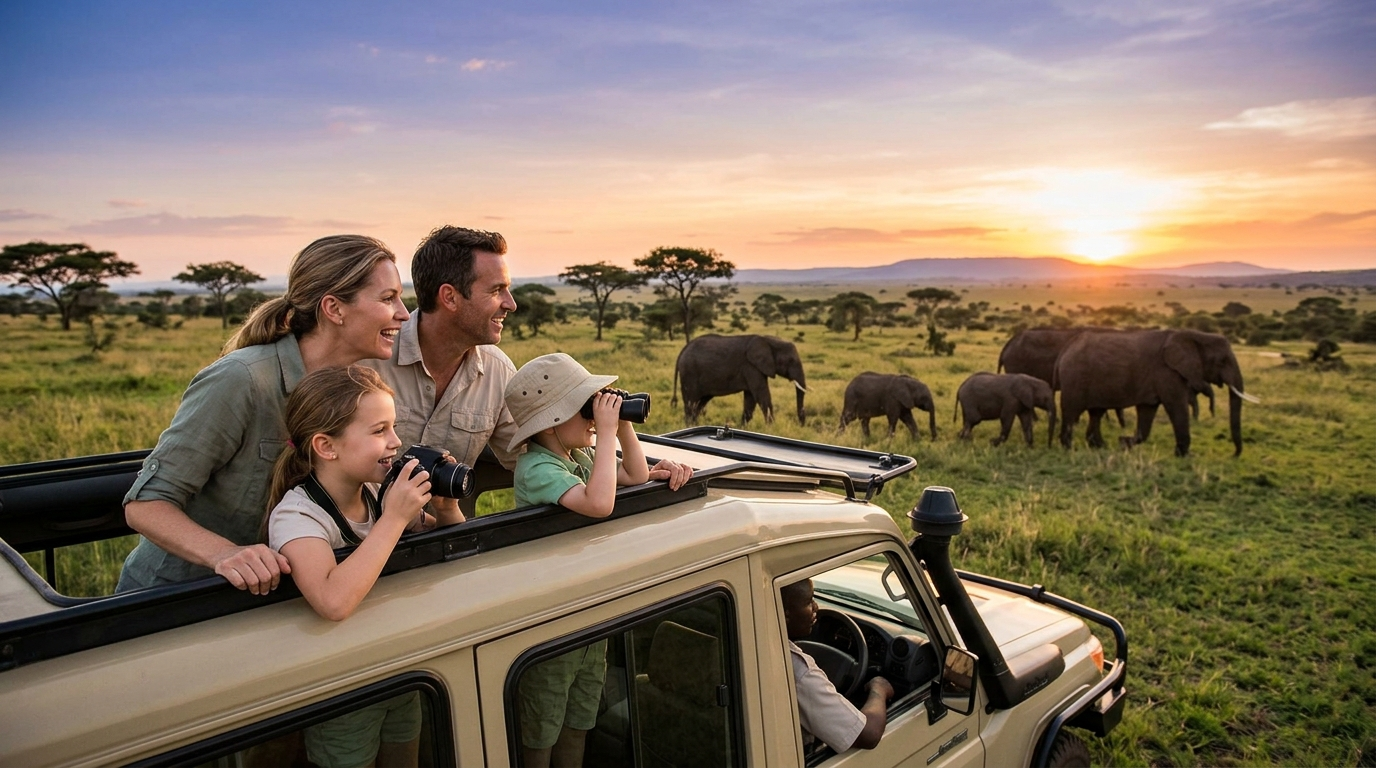
Most safari content assumes a couple on a honeymoon or a milestone anniversary trip, which leaves genuine, practical questions unanswered for families wondering whether a safari is actually appropriate for their children — questions about minimum age policies, malaria risk, and whether young kids can realistically sit through hours-long game drives. This guide covers family safari Africa planning specifically, addressing the safety and suitability questions that couple-focused safari content simply doesn’t answer — the practical detail parents actually need before booking rather than romantic marketing copy about sunsets and gin and tonics.
Budgeting for a Family Safari
Cost is a genuinely important variable in any family safari Africa itinerary, since the extra room, private vehicle, or family programming can add up beyond what a couple’s trip would cost.
Additional Costs Family Safaris Often Involve
Beyond standard per-person lodge rates, family safaris sometimes involve additional costs for private vehicles, dedicated family guides, or children’s programming, worth confirming as part of the overall quote rather than assuming family accommodation carries no premium over standard rates.
Comparing Costs to a Couple’s Safari
A family of four generally spends meaningfully more in total than a couple, given the additional lodge nights and potential private vehicle costs, though per-person costs can sometimes be similar to or lower than a couple’s rate if a family suite is priced per-room rather than strictly per-person.
Best Time for a Family Safari
Aligning with School Holidays
Because most Lebanese families plan safaris around school breaks, the summer and winter holiday periods see the heaviest demand for family-oriented lodges specifically, making early booking especially important for these windows.
Weather and Game Viewing Considerations
The same dry-season advantages that benefit any safari — easier game viewing during June through October in East Africa, or May through September in South Africa — apply equally to family trips, with the added benefit that drier conditions generally mean fewer mosquitoes and more comfortable overall conditions for children.
Is a Safari Safe and Suitable for Young Children?
The Honest Answer: It Depends on the Child and the Lodge
A safari can be a genuinely excellent family experience, but suitability depends heavily on both the specific child’s temperament (long game drives require real patience) and the specific lodge or reserve chosen, since not every property is set up to welcome young children comfortably.
What Makes Some Safaris More Family-Appropriate Than Others?
Reserves and lodges that specifically cater to families — with shorter, more flexible game drive options, dedicated family activities, and staff experienced with children — deliver a meaningfully better experience for young kids than a property built primarily around a quiet, adult-focused atmosphere.
Minimum Age Policies at Safari Lodges
Age policy is often the very first practical hurdle in planning a family safari Africa trip involves, and it’s worth understanding before falling in love with a specific lodge.
Why Age Minimums Exist?
Many safari lodges set a minimum age for game drives, often 6 or 8 years old, reflecting genuine safety considerations around wildlife encounters and the practical reality that very young children may struggle with the extended sitting and quiet required during a drive.
Finding Lodges That Welcome Younger Children
A growing number of family-oriented lodges specifically accommodate younger children, offering private vehicles, shorter drive durations, and alternative activities for children below the standard age minimum, making it worth researching family-specific policies rather than assuming every lodge enforces the same restrictions.
Malaria Precautions for Family Safaris
Health considerations are where a family safari Africa itinerary diverges most from a couple’s trip, since children’s medical needs require more careful planning.
Malaria-Free Reserve Options
For families wanting to avoid the antimalarial medication conversation altogether, several reserves — Madikwe Game Reserve in South Africa among the most notable — sit within malaria-free zones while still delivering excellent Big Five game viewing, making this a genuinely strong option for family travel specifically.
Managing Malaria Risk Where It Applies
For reserves outside malaria-free zones, most families consult a doctor about appropriate antimalarial medication for children well ahead of the trip, alongside standard precautions like appropriate clothing and repellent during dawn and dusk game drives when mosquito activity peaks.
East Africa vs. South Africa for Family Safaris
Region choice is one of the first big decisions in any family safari Africa planning process, since East Africa and South Africa offer genuinely different experiences for children specifically.
Why South Africa Often Suits Families Better?
South Africa’s malaria-free reserve options, shorter and more direct flight logistics, and generally more developed family-specific lodge infrastructure make it a frequently recommended starting point for a first family safari compared to East Africa’s migration-focused parks.
When East Africa Still Makes Sense for Families?
Families specifically drawn to the Great Migration, or with older children genuinely engaged by the scale and drama of the Serengeti-Mara ecosystem, can still have an excellent experience in East Africa, provided the lodge chosen has genuine family programming rather than assuming the destination itself guarantees suitability.
Choosing a Family-Friendly Safari Lodge
Family Suites and Interconnecting Rooms
The strongest family safari lodges offer dedicated family suites or interconnecting rooms, letting parents and children share adjoining but distinct sleeping spaces rather than cramming everyone into a single standard safari tent or room.
Junior Ranger and Kids’ Programs
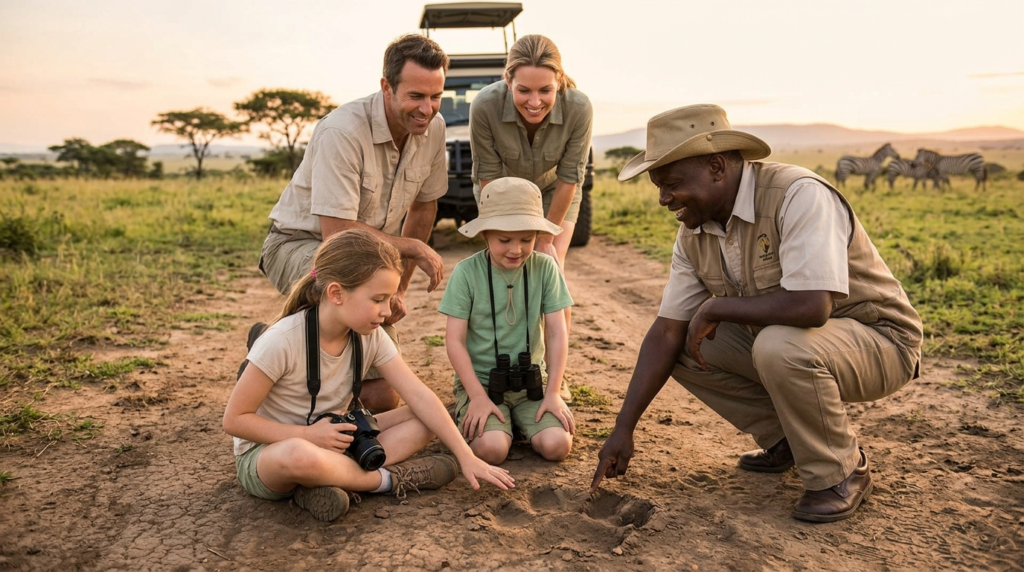
Many family-oriented lodges run junior ranger programs or dedicated children’s activities — tracking lessons, nature walks scaled to a child’s attention span, or basic conservation education — giving kids an engaging alternative to sitting through every adult-paced game drive.
Private Vehicles for Families
Booking a private vehicle rather than joining shared game drives gives families the flexibility to shorten a drive if a child grows restless, or extend it if everyone’s genuinely engaged, without needing to coordinate around other lodge guests’ preferences.
Preparing Children for a Safari
Preparation is often the most overlooked part of family safari Africa planning, even though it can meaningfully improve how much children actually enjoy the experience.
Setting Realistic Expectations
Preparing children beforehand — explaining what a game drive involves, the patience required, and the genuine excitement of spotting wildlife — helps set realistic expectations rather than assuming a young child will intuitively understand the pace and quiet a safari requires.
Packing for Kids on Safari
Beyond standard safari packing essentials, families should prioritize sun protection, entertainment for quieter moments during longer drives, and comfortable, weather-appropriate clothing in neutral colors matching the broader safari dress code.
Combining a Family Safari with Beach Time
Why This Pairing Works Well for Families?
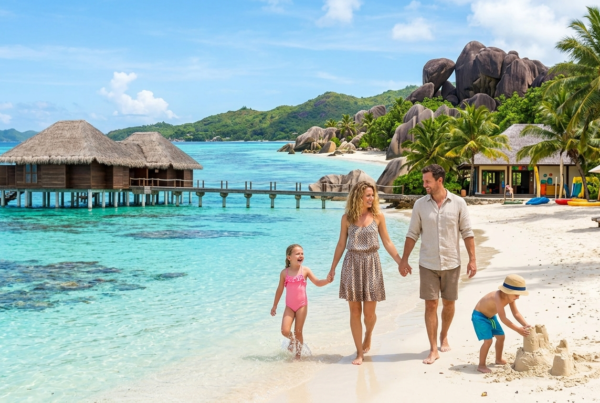
Pairing a family safari Africa itinerary with a beach extension — a coastal stretch in South Africa, or a Zanzibar or Indian Ocean island add-on for East Africa trips — gives children a genuine change of pace after several days of early-morning game drives, and rewards the more active safari portion with pure relaxation time.
Sequencing the Trip
Most families sequence the safari first, since children tend to have more energy and enthusiasm for early wake-up calls at the start of a trip, saving the beach stretch as a lower-effort finale before the flight home.
Best Age for a First Family Safari
Younger Children (Ages 4-7)
For this age range, malaria-free reserves with strong family programming and private vehicle options tend to deliver the best experience, since the flexibility to adjust pacing matters more at this age than at any other.
School-Age Children and Teenagers (Ages 8+)
Children above most lodges’ standard minimum age can generally join full-length game drives comfortably, and this age range often gets the most out of a safari’s educational and adventure elements, making it an excellent age to introduce a first proper safari experience.
Frequently Asked Questions
Generally yes, provided the specific lodge is chosen carefully. A well-planned family safari Africa trip works best at family-oriented reserves with age-appropriate activities, private vehicle options, and malaria-free status where relevant.
Many lodges set a minimum age of 6 to 8 years old, though a growing number of family-specific properties accommodate younger children with shorter drives and dedicated activities.
Yes — Madikwe Game Reserve in South Africa is among the most notable malaria-free options, still delivering strong Big Five viewing without the added consideration of antimalarial medication for children.
Family suites or interconnecting rooms, junior ranger or kids’ programs, and the option to book a private vehicle for flexible game drive pacing are the key features that distinguish genuinely family-friendly lodges.
Children aged 8 and above generally get the most out of a full safari experience, though younger children (ages 4-7) can also have an excellent trip at the right malaria-free, family-oriented lodge with flexible programming.
Planning a family safari and want help choosing the right lodge for your children’s ages? Request a tailored quote from Fayad Travel and we’ll match the reserve to your family’s needs.