
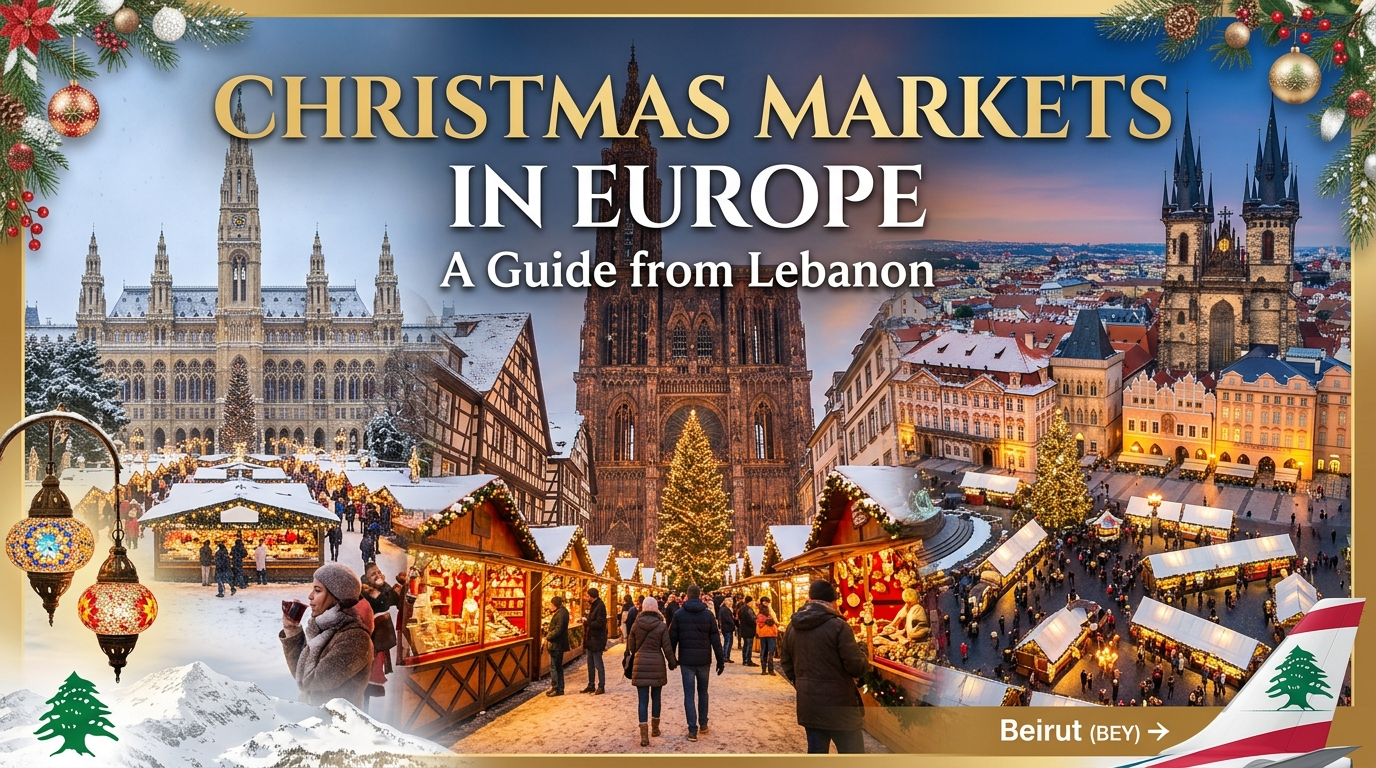
Europe’s Christmas markets turn a handful of its most beautiful old towns into something genuinely different for about six weeks each year — wooden stalls, mulled wine, and a festive atmosphere built up over centuries of tradition rather than a recent tourism invention. For Lebanese travelers used to thinking of Europe as a summer destination, this guide to Christmas markets Europe offers as a winter alternative covers which cities do it best and how to plan the trip around Beirut’s flight options — a genuinely different season to explore Europe than the usual July-August default.
When Christmas Market Season Actually Runs?
Timing is everything when planning around Christmas markets Europe hosts each year, since the season is considerably shorter than most travelers expect.
The Standard Season Window
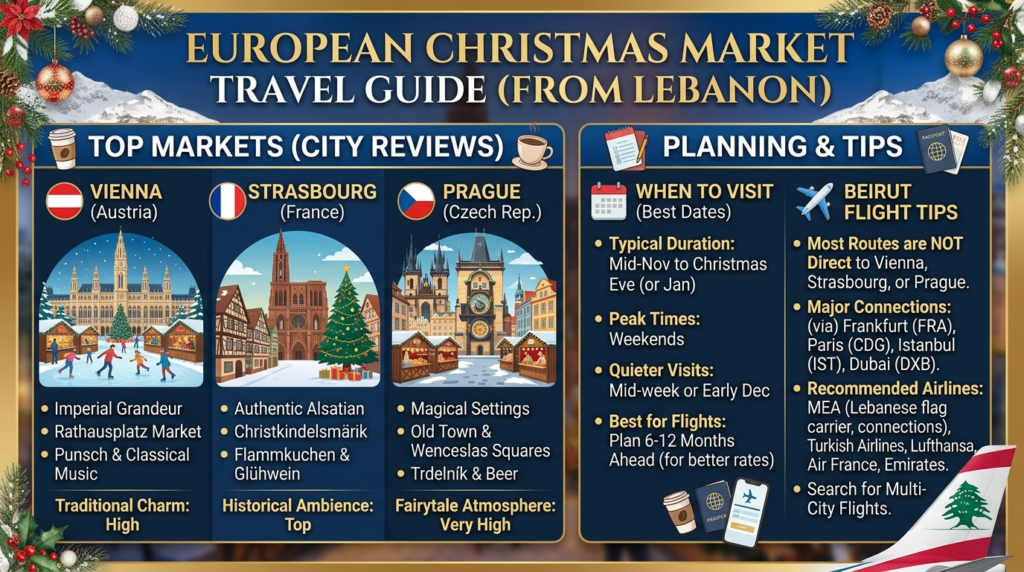
Most major European Christmas markets open in late November and run through December 23-26, with a handful continuing into early January, meaning the window for a market-focused trip is genuinely narrow compared to a typical multi-month European travel season.
Why Timing Within the Season Matters?
Early in the season (late November to early December) offers a calmer, less crowded market experience, while the final two weeks before Christmas bring the busiest crowds and, in many cities, the most elaborate late-season programming and events.
Vienna: Grand Squares and Imperial Backdrops
Vienna is often the first name that comes up in any conversation about Christmas markets Europe has to offer, and its reputation is well earned.
The Rathausplatz Market
Vienna’s market in front of the City Hall (Rathausplatz) is among Europe’s most photographed, combining an enormous illuminated tree, dozens of stalls, and an ice-skating rink set against the building’s grand Gothic Revival facade.
Beyond the Main Square
Vienna hosts several additional markets throughout the city, each with its own character — from the more traditional Christkindlmarkt atmosphere to smaller, more design-focused markets in different neighborhoods, giving visitors genuine variety within a single city.
Strasbourg: The Self-Proclaimed Capital of Christmas
A Centuries-Old Tradition
Strasbourg’s Christmas market dates back to 1570, making it one of the oldest in Europe, and the city has built its entire winter identity around the tradition, decorating its half-timbered old town extensively for the season.
The Grande Île Setting
Strasbourg’s UNESCO-listed old town, split across several small islands in the Ill River, gives the market setting a genuinely picturesque quality that few other Christmas market cities can match, with market stalls woven throughout the historic streets rather than concentrated in a single square.
Prague: Gothic Spires and Value Pricing
Old Town Square’s Market
Prague’s Old Town Square market, framed by the city’s Astronomical Clock and Gothic church spires, offers one of the most visually striking Christmas market settings in Europe, particularly after dark when the surrounding architecture is illuminated.
Why Prague Often Wins on Value?
Prague generally offers more accessible pricing for accommodation and dining than Vienna or Strasbourg, making it an appealing choice for travelers wanting the full Christmas market experience without Western Europe’s premium winter pricing.
Other Markets Worth Knowing About
Salzburg’s Mozart-Era Charm
Salzburg’s Christkindlmarkt, set against the same baroque backdrop associated with Mozart’s birthplace, offers a smaller, more intimate market experience than Vienna’s, worth combining with a broader Austria-focused winter itinerary.
Budapest’s Vörösmarty Square
Budapest’s main Christmas market, centered on Vörösmarty Square, has grown into one of Europe’s most highly regarded markets in recent years, combining traditional stalls with a strong food and craft vendor scene.
Food and Drink Traditions Worth Trying
Mulled Wine and Regional Variations
Mulled wine, served hot in reusable souvenir mugs at nearly every market, comes in regional variations worth comparing across cities — Austria’s Glühwein, France’s vin chaud in Strasbourg, and the Czech Republic’s own take each carry slightly different spice profiles.
Market Foods Beyond the Drinks
Beyond mulled wine, each market has its own signature foods — roasted chestnuts and gingerbread across most German-speaking markets, Strasbourg’s Alsatian specialties, and Prague’s trdelník (a rolled, sugar-coated pastry) — worth prioritizing as part of the market experience rather than an afterthought.
Getting There from Beirut
Logistics for visiting Christmas markets Europe travelers dream about start with figuring out the flight routing, since December’s schedule tends to run busier than usual.
Flight Routing for Winter Travel
Middle East Airlines’ direct flight to Geneva offers one option for a Switzerland-anchored winter trip, though reaching Vienna, Prague, or Strasbourg typically requires a one-stop connection through a regional hub, worth factoring into overall trip timing given December’s generally busier flight schedules.
Visa Timing for a Winter Trip
Since all of these destinations sit within the Schengen Area, the same Schengen visa process applies regardless of which specific market city is the destination, and given December’s status as a peak travel period, starting the visa application process several months ahead is worth prioritizing.
Budgeting for a Christmas Market Trip
Cost is worth planning around carefully, since Christmas markets Europe destinations host all see a genuine seasonal price bump compared to the rest of the year.
Typical Costs by City
A comfortable week-long trip for a couple covering one or two market cities typically totals $3,500 to $6,000 including flights, with Vienna and Strasbourg running toward the higher end of that range and Prague offering a noticeably more accessible alternative.
Why December Pricing Runs Higher?
Flights and hotels across all these destinations command a premium during the Christmas market season compared to shoulder-season European travel, reflecting both the market season’s popularity and its overlap with the broader December holiday travel period.
Christmas Markets for Families
What Makes Markets Family-Friendly?
Most major Christmas markets include family-oriented elements — carousel rides, ice-skating rinks, and craft stalls appealing to children alongside the mulled wine and food stands aimed at adults, making a market visit genuinely enjoyable across generations.
Managing Cold Weather with Children
December’s cold temperatures across all these destinations call for serious layering for young children, along with realistic expectations about how long a child will comfortably enjoy an outdoor market before needing a warm indoor break.
Building a Multi-City Christmas Market Itinerary
Pulling together a genuine tour of Christmas markets Europe offers works best when the route is built around a manageable number of stops rather than an ambitious wish list.
Combining Two or Three Cities
Vienna and Salzburg pair naturally within Austria, while a Strasbourg-and-a-nearby-German-market combination works well for travelers wanting to cover both the French and German Christmas market traditions in one trip.
Pacing a Winter European Trip
Because December days are short and often cold, pacing a market-hopping itinerary with realistic expectations — fewer cities, more time enjoying each one’s specific atmosphere — tends to produce a better experience than an ambitious multi-city sprint.
Frequently Asked Questions
Among the many Christmas markets Europe hosts each winter, Vienna, Strasbourg, and Prague are consistently ranked among the best, each offering a distinct atmosphere — Vienna’s grand imperial squares, Strasbourg’s centuries-old half-timbered old town, and Prague’s dramatic Gothic backdrop at more accessible pricing.
Most open in late November and run through December 23-26, with a handful continuing into early January, making the season genuinely limited to about six weeks each year.
Yes, since all major Christmas market destinations sit within the Schengen Area, requiring the standard Schengen visa process, which is worth starting well ahead given December’s status as a peak travel period.
Prague generally offers more accessible accommodation and dining pricing than Vienna or Strasbourg, making it a strong choice for travelers wanting the full market experience at a lower overall cost.
Early in the season (late November to early December) offers a calmer, less crowded experience, while the final two weeks before Christmas bring the busiest crowds and often the most elaborate programming.
Planning a European Christmas market trip and want the timing and visa process handled properly? Speak with a Fayad Travel destination expert to build the right winter itinerary.