

A multi-city business trip carries a different kind of planning risk than a single-destination trip — one delayed flight, one poorly sequenced leg, or one overlooked visa requirement can cascade through the rest of the itinerary in a way that a simple there-and-back trip never has to worry about. This guide covers multi-city business trip planning specifically, addressing the sequencing, logistics, and tracking details that separate a smooth multi-country trip from a stressful one — the kind of practical process guidance most generic corporate travel content skips entirely.
Sequencing Cities in the Right Order
Sequencing is really the foundation of any good multi-city business trip planning process, since everything else in the itinerary builds on this initial decision.
Geographic Logic Over Meeting Priority Alone
The most efficient multi-city itineraries sequence stops based on geographic proximity and flight connectivity first, then fit meeting priorities around that route, rather than jumping back and forth between distant cities based purely on which meeting was scheduled first.
Building in Buffer Between Legs
Scheduling at least a few hours of buffer between arriving in one city and the first meeting there — rather than booking a flight that lands with barely enough time to reach the meeting room — protects the entire itinerary from a single delay cascading into missed commitments further down the trip.
Managing Time Zones Across the Trip
Planning Meeting Times Around Jet Lag
For itineraries crossing multiple time zones, scheduling the most important meetings later in each city’s stay, after the traveler has had a day or so to adjust, generally produces better outcomes than front-loading critical meetings immediately after a long-haul arrival.
Coordinating Calls with the Home Office
Multi-city trips often still require calls or check-ins with colleagues back in Lebanon, and mapping out the time zone differences for each leg in advance avoids the awkward scramble of calculating time differences mid-trip while also managing meeting schedules.
Layover and Connection Strategy
Choosing Layovers That Add Value
Where a layover is unavoidable, choosing a hub that offers reasonable lounge access or a genuinely useful connection time (rather than either a rushed sprint between gates or several wasted hours) makes the difference between a layover that’s simply tolerated and one that’s actually productive.
Building in Contingency for Missed Connections
For a multi-leg itinerary, it’s worth identifying which connections are tightest and have the least schedule flexibility, and considering whether a slightly earlier flight or an extra buffer city makes sense to protect against a missed connection derailing the rest of the trip.
Visa Coordination Across Multiple Countries
Visa logistics are often the most underestimated part of multi-city business trip planning, since each country involved runs its own independent process and timeline.
Different Countries, Different Requirements
A multi-city trip spanning several countries often means navigating different visa requirements for each leg — a Schengen visa covering multiple European stops, a separate UK visa if London is included, or a UAE visa for a Gulf stop — all of which need to align with the same overall travel dates.
Sequencing Visa Applications
Because visa processing timelines vary by country, it’s worth starting with whichever leg has the longest or least predictable processing time, then building the rest of the itinerary’s booking timeline around that constraint rather than treating every visa application as equally urgent.
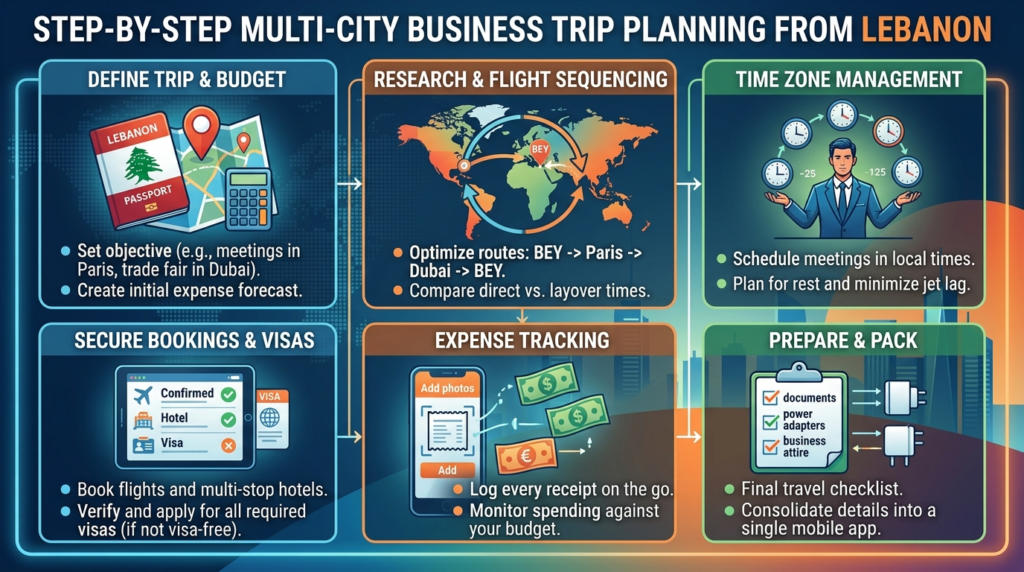
Common Mistakes in Multi-City Trip Planning
Even experienced business travelers make a few recurring mistakes in multi-city business trip planning that are worth naming directly.
Overpacking the Schedule
Trying to fit too many cities or too many meetings into a limited number of days is one of the most common planning mistakes, leaving no room to absorb a delay or an extended meeting without pushing the entire remaining itinerary off course.
Ignoring Recovery Time Between Long-Haul Legs
Booking back-to-back long-haul flights without any recovery time between them tends to produce a traveler who’s noticeably less effective in later meetings than earlier ones, undermining the value of the trip’s later stops even if the logistics technically worked.
Underestimating Visa Processing for the Slowest Leg
Building an itinerary around the assumption that all visa applications will process at roughly the same speed, rather than planning around the slowest and least predictable one, is a common source of last-minute scrambling that a bit of upfront research would have avoided.
Tools and Technology for Managing Complex Itineraries
Itinerary Management Apps
A dedicated itinerary management app that consolidates flight, hotel, and meeting information into a single timeline — rather than juggling separate confirmation emails — makes a genuinely complex multi-city trip easier to track and adjust in real time.
Shared Calendars for Traveling Executives
For executives traveling with an assistant or team back in Lebanon, a shared calendar reflecting the traveler’s local time at each stop helps avoid scheduling conflicts and keeps everyone aligned on availability throughout the trip.
Hotel Loyalty and Consistency Across Cities
Sticking with One Hotel Group Where Possible
Booking within a single hotel loyalty program across multiple cities, where comparable properties exist, accumulates points and status benefits that add up meaningfully over a multi-leg trip, plus a more consistent experience in terms of room type and service expectations.
Balancing Loyalty Against Location
That said, a hotel’s proximity to the day’s meetings should still take priority over loyalty program consistency — a slightly less convenient location purely for points accumulation can cost more in wasted transfer time than the loyalty benefit is worth.
Expense Tracking Across a Complex Itinerary
Good multi-city business trip planning doesn’t stop once the trip begins — tracking spending accurately across several countries is its own ongoing task.
Keeping Receipts Organized by City and Leg
A multi-city trip generates considerably more receipts and expense categories than a single-destination trip, and organizing them by city or leg as the trip progresses, rather than sorting through a pile of receipts after returning home, saves significant time on expense reporting.
Using a Single Currency Reference Point
Converting each leg’s expenses to a single reference currency as they’re incurred, rather than leaving all conversion to the final expense report, reduces errors and makes it easier to track whether the trip is running within budget throughout rather than only discovering the total cost at the end.
Booking Flexibility for Multi-City Trips
Why Flexible Fares Matter More Here?
Given how many things can shift across a multi-city trip — a meeting rescheduling, a city getting added or dropped — booking flexible or easily changeable fares and hotel rates for at least the more uncertain legs of the trip is worth the modest premium over the cheapest non-refundable options.
Balancing Flexibility Against Cost
Not every leg needs full flexibility — a confirmed, unchangeable opening meeting in the first city might justify a locked-in fare, while a tentative later addition benefits more from flexible terms, making it worth assessing each leg’s certainty individually rather than applying one booking policy across the whole trip.
Working with a Travel Agency for Multi-City Trips
Why Complexity Favors Professional Coordination?
The more cities and countries a single trip involves, the more a dedicated travel agency’s coordination capacity pays off — managing flight sequencing, visa timelines, and hotel bookings across multiple markets simultaneously is considerably more error-prone when handled independently by a traveler already focused on the actual business purpose of the trip.
A Single Point of Contact for Changes
When something changes mid-trip — a meeting moves, a flight gets cancelled, an additional city gets added — having a single travel agency contact who already has the full itinerary’s context produces a faster resolution than a traveler trying to rebook each affected piece independently.
Frequently Asked Questions
Effective multi-city business trip planning means sequencing cities based on geographic and flight logistics rather than meeting priority alone, building buffer time between legs, coordinating visa applications around the longest processing timeline, and tracking expenses by city as the trip progresses rather than after returning home.
Scheduling the most important meetings later in each city’s stay, after some time to adjust, and mapping out time differences for home-office check-ins in advance both help produce a smoother trip than ignoring jet lag’s impact on meeting performance.
A missed or delayed connection cascading through the rest of the trip is usually the biggest risk, which is why building buffer time between legs and identifying the tightest connections in advance matters more than optimizing for the shortest possible total travel time.
Where comparable properties exist, yes, for the accumulated points and consistency — though a hotel’s proximity to meetings should still take priority over loyalty program benefits.
Generally yes, particularly for trips spanning multiple countries with different visa requirements, since the coordination burden scales with complexity faster than most travelers expect, and a single point of contact simplifies handling changes mid-trip.
Planning a multi-city business trip and want the logistics coordinated professionally? Request a tailored quote from Fayad Travel and we’ll manage the sequencing, visas, and bookings for you.