

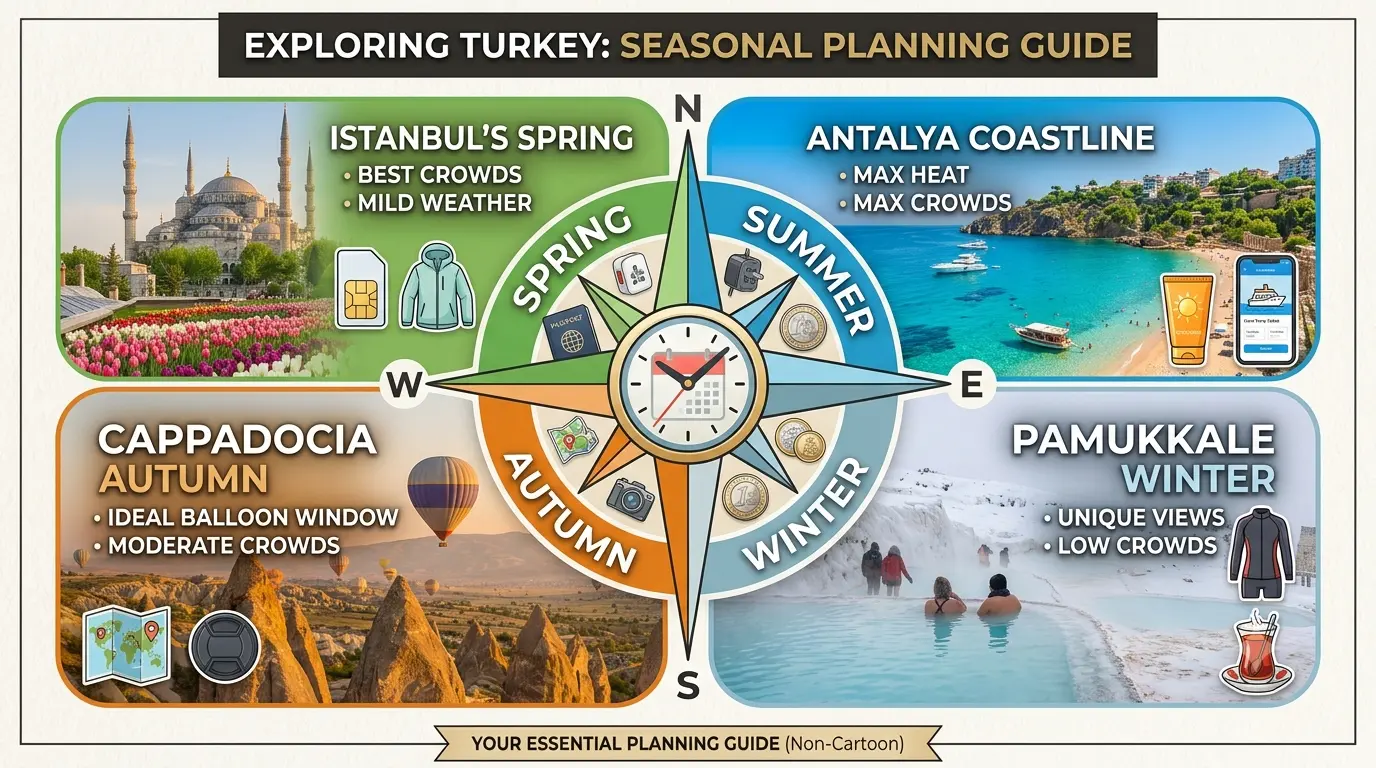
If you’re weighing up the best time to visit Turkey, the honest answer is: it depends on what you actually want out of the trip. Turkey isn’t a single climate — it’s a country where Istanbul’s Bosphorus mist, Cappadocia’s high desert winds, and Antalya’s Mediterranean coastline can all be experiencing completely different weather on the same afternoon. For Lebanese travelers, that’s actually good news. Turkey sits close enough for a short flight, shares familiar Mediterranean rhythms, and offers a season for nearly every kind of trip — honeymoon, family holiday, or quick getaway.
This guide breaks down Turkey’s travel seasons month by month, with a specific focus on the two experiences that drive the most questions from our clients: Cappadocia’s hot air balloon flights and Antalya’s summer heat.
Why Timing Matters More in Turkey Than Most Destinations?
Turkey spans several climate zones. The coast behaves like the Mediterranean you already know from Lebanon — hot, dry summers and mild, wetter winters. Central Anatolia, where Cappadocia sits, has a continental climate with cold winters, warm summers, and the kind of wind variability that directly affects whether a hot air balloon flight goes ahead. Istanbul sits somewhere in between, with more rain spread across the year and a noticeably cooler, greyer winter than the south coast.
That variation means the best time to visit Turkey really depends on your itinerary. A family heading to Antalya’s beach resorts wants different weather than a couple booking a Cappadocia balloon flight or a group doing a cultural week in Istanbul.
Turkey’s Seasons at a Glance
Spring in Turkey (April–May): The Sweet Spot for Most Itineraries
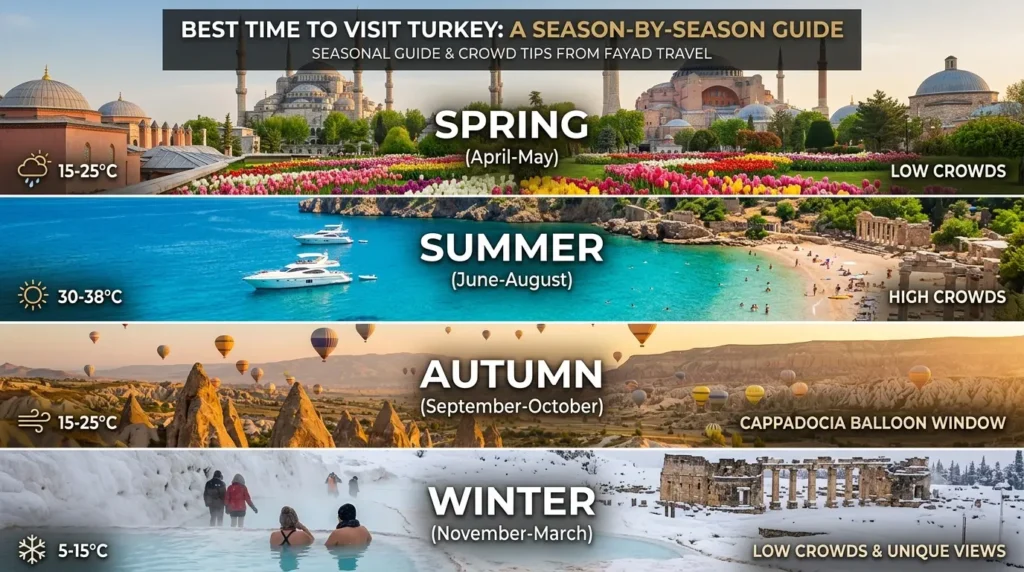
Spring, running roughly April to May, brings warm and pleasant weather across the country, with temperatures typically in the high 60s to low 80s Fahrenheit — ideal for exploring ancient sites without summer’s heat. April in particular tends to bring blue skies and comfortable daytime temperatures, alongside blooming parks and gardens.
For most of our clients, this is the sweet spot. It’s warm enough for coastal walks and sightseeing, cool enough that a day at Ephesus or Pamukkale doesn’t turn into an endurance test, and it lines up well with Lebanese school breaks around Easter. It’s also one of the two best windows for Cappadocia ballooning (more on that below), which makes April–May a strong choice if your itinerary combines a few regions rather than a single beach stay.
Good for: first-time visitors, couples, honeymooners, multi-city itineraries combining Istanbul, Cappadocia, and the coast.
Summer in Turkey (June–September): Beach Season, With a Heat Caveat
June through August is hot almost everywhere in Turkey, especially along the coast. On the south coast around Antalya, summer temperatures regularly push into the mid-thirties Celsius, which is perfect for lounging by the sea or pool but can make sightseeing at ancient ruins genuinely uncomfortable during midday hours.
This is the trade-off worth knowing before you book: summer is the best season for the actual beach-and-resort experience most Lebanese families are booking Turkey for, but it’s the weakest season for combining that with heavy sightseeing days. If your itinerary is resort-centered, summer works well. If you’re planning full days walking through Cappadocia’s valleys or Istanbul’s old city, the heat becomes a real factor, particularly for families traveling with young children or older relatives.
Practical tip we give clients: if summer is your only available window, front-load outdoor sightseeing into early morning slots and treat midday as pool or indoor time — the same rhythm many Lebanese travelers already use at home in July and August.
Good for: beach and resort holidays, families prioritizing pool time over sightseeing, groups wanting reliably sunny days for every date on the calendar.
Autumn in Turkey (September–October): The Quiet Favorite
The weather doesn’t fully cool down until mid-September, which still allows plenty of time to enjoy the Mediterranean beaches while avoiding the peak summer crowds. Many experienced travelers and travel professionals consider September and October the true best months to visit, thanks to comfortable weather and lighter crowds than the summer peak.
Autumn quietly does everything spring does, with the added benefit of warmer sea temperatures after a full summer of heat — useful if a coastal stop is part of a longer, multi-region trip. It also happens to be the single best stretch for Cappadocia’s hot air balloons, which we’ll get into next.
Good for: honeymoon couples wanting warm water without summer crowds, travelers combining a coastal stay with Cappadocia, anyone prioritizing photography and mild sightseeing conditions.
Winter in Turkey (November–March): Niche, But Not Without Appeal
From November through March, Turkey can get quite cold, and many coastal hotels close for the season. This isn’t the window we’d recommend for a first Turkey trip, but it has genuine niche appeal: ski trips, snow-draped visits to Cappadocia for travelers who don’t mind lower balloon-flight odds, and off-season pricing for travelers with flexible dates. January through March also tends to be the cheapest period for flights and accommodation.
Good for: ski trips, budget-conscious travelers, repeat visitors who’ve already done the classic itinerary.
Cappadocia Hot Air Ballooning: The Question We Get Most
Because a sunrise balloon flight over Cappadocia’s fairy chimneys is the single most-requested experience in our Turkey itineraries, it deserves its own breakdown — and its own seasonal logic, separate from the rest of the country.
Best Months for a Balloon Flight
The best months for a Cappadocia balloon ride are widely considered to be April, May, September, and October, which offer flight success rates above 85 percent, comfortable temperatures, and moderate crowds. The autumn window specifically — August through October — is often described as the golden period, with cancellation rates as low as 7 to 17 percent thanks to light, stable morning winds and clear skies.
Winter tells a very different story. The worst months for ballooning are December through February, when cancellation rates can climb to 50 to 60 percent. March sits in an awkward transition period, with strong winds that frequently delay or cancel flights even as the rest of the country starts to feel like spring.
What This Means for Your Itinerary?
If a balloon flight is a must-do, build in a buffer night in Cappadocia rather than a single overnight stay. Operators typically schedule first-time balloon bookings for the traveler’s first morning in the region specifically so there’s flexibility to reschedule if the flight is grounded. This is standard advice from operators on the ground, and it’s the single biggest planning mistake we see travelers make — booking Cappadocia as a one-night stopover with no room to rebook a cancelled flight.
Antalya and the South Coast: Managing the Summer Heat
Antalya deserves a specific mention because it’s the anchor of so many Turkey packages we book for Lebanese families.
Best Antalya Weather Windows
Summer temperatures on this stretch of coast regularly reach the mid-thirties Celsius, which is a different intensity than Beirut’s coastal summer — drier heat, stronger midday sun, and less relief after dark in some resort areas.
April is one of the best months to visit Antalya specifically, with temperatures rising into a comfortable range that suits both coastal walks and sightseeing at nearby ancient sites, though the sea itself is still too cool for swimming. If swimming is the priority, June through September is the realistic window; if comfortable sightseeing alongside a shorter beach stay is the priority, late April through May or September gives you both without the peak heat.
Matching the Season to Your Trip Type
Honeymoon Couples
April–May or September–October. Warm enough for the coast, mild enough for Cappadocia sightseeing, and the strongest ballooning odds of the year.
Families with Young Children
Late spring or early autumn avoids both the harshest midday heat and the highest winter cancellation risk for activity-based days.
Beach-First Travelers
June–August, accepting that sightseeing days should be planned around the cooler morning and evening hours.
Budget-Flexible Travelers
January–March offers the lowest prices, with the trade-off of cold weather inland and closed coastal properties.
Frequently Asked Questions
April to June and September to October are generally considered the best months, thanks to comfortable weather and moderate crowds, though the “best” month really depends on whether your priority is the coast, Cappadocia, or city sightseeing.
April, May, September, and October offer the highest flight success rates, above 85 percent, with pleasant temperatures and moderate crowds. Summer has slightly higher success rates but comes with peak crowds and prices.
Not for a beach-first trip — summer is peak season for the coast for good reason. It does get uncomfortably hot for full days of sightseeing in Cappadocia, Istanbul, or inland ruins, so plan those activities for morning hours if you’re traveling June through August.
Yes — cancellation rates between December and February can reach 50 to 60 percent, compared with under 20 percent in the best autumn window.
Yes. Flight times from Beirut are short, and spring or autumn dates line up well with typical school break windows while avoiding both peak summer heat and winter ballooning risk.
Plan Your Turkey Trip with Fayad Travel
There isn’t one single best month for Turkey — there’s a best month for your itinerary. A family booking an Antalya resort week has different priorities than a couple building a Cappadocia-and-coast honeymoon, and the right season shifts depending on which experience matters most to you.
This is exactly where a custom itinerary earns its value over a generic package. Our team can map your dates against the specific regions on your list — checking ballooning odds for Cappadocia, resort weather for Antalya, and event timing in Istanbul — so you’re not guessing. Explore Fayad Travel’s Turkey packages and speak to a destination expert to time your trip around the weather and experiences that matter most to you.