
There’s a particular kind of trip that only works alone: no compromises on the itinerary, no negotiating over dinner, no one else’s pace to match. Solo luxury travel is built around that freedom, and for the right traveler it’s one of the most rewarding ways to see the world. It’s also a style of travel that most mainstream advice handles poorly, because the usual packages, pricing, and hotel setups are designed for couples and families.
This guide is written for Lebanese travelers considering a trip on their own — executives taking time to reset, travelers marking a personal milestone, or people who simply prefer to move at their own speed. It covers how to plan well, what it really costs, how to stay safe, and where thoughtful planning makes the biggest difference.
What Solo Luxury Travel Actually Means?
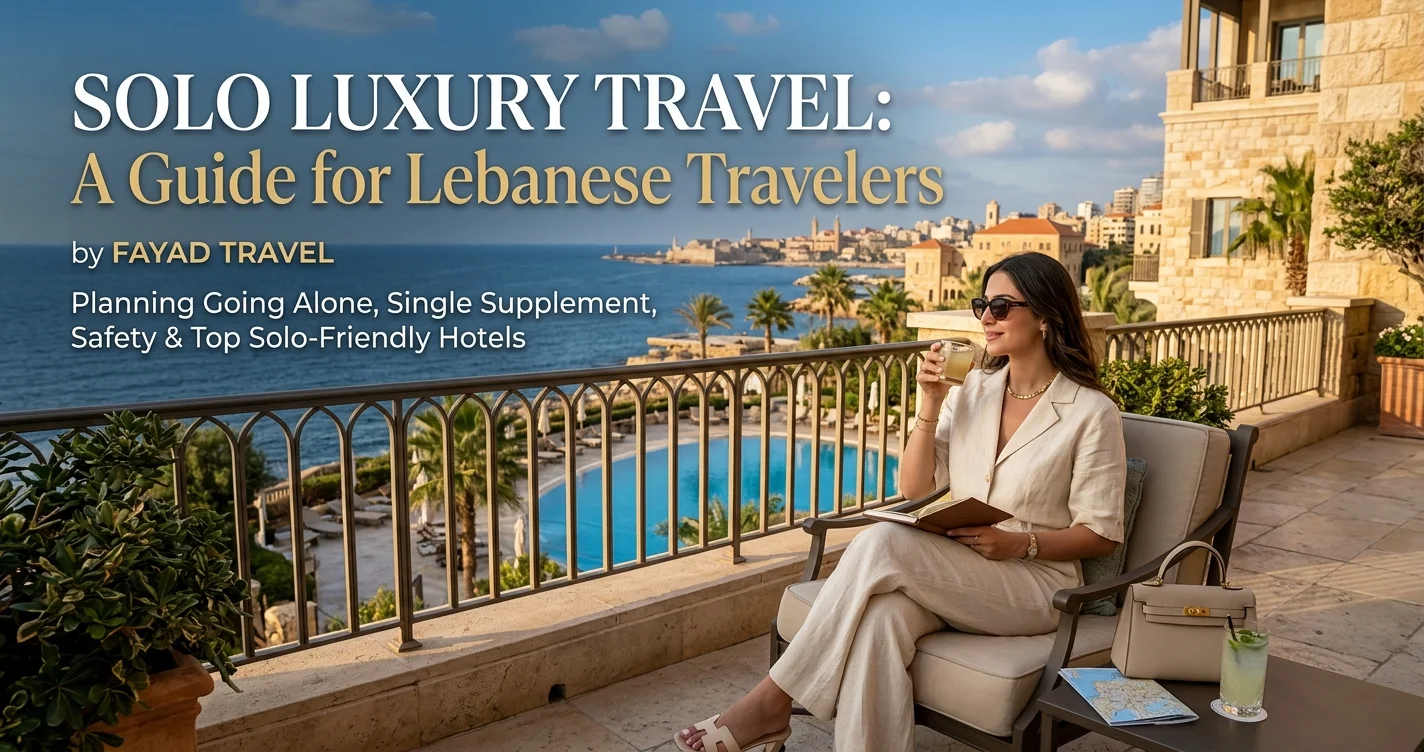
Solo luxury travel isn’t just a standard trip taken by one person. It means designing the whole journey around a single traveler: a private guide in place of a group tour, a hotel with genuine service rather than a crowded breakfast room, dining that doesn’t feel awkward at a table for one, and an itinerary shaped entirely by your own interests. Done well, the result feels less like traveling alone and more like having a place built around you.
1 traveler means a fully personalized pace, with no compromise on interests
Single supplement the extra charge many hotels and tours add for one guest
Private guide often the single best upgrade for safety and local insight
The Real Benefits of Traveling Alone in Luxury
Total Control Over Your Schedule
When you’re the only decision-maker, you can spend three hours in a museum that fascinates you, skip a famous site that doesn’t, and change plans over breakfast. That flexibility is the biggest luxury of all, and it’s something couples and groups rarely get.
Deeper Engagement With Where You Are
Solo travelers tend to talk more with guides, hosts, and locals. Without a travel companion to default to, you notice more, ask more, and often come home with a stronger sense of the place than you would from a shared trip.
Rest That’s Actually Restful
For busy professionals, a solo trip can be genuine recovery time. There’s no one to entertain, no logistics to share, and no pressure to fill every hour. A well-planned spa retreat or slow coastal stay can be exactly what a demanding year calls for.
Understanding Single Supplement Costs
The most common financial surprise for solo travelers is the single supplement — an additional charge many hotels, cruises, and organized tours apply because their pricing assumes two people sharing a room. Not every property charges one, and policies differ widely, so it’s worth asking early rather than discovering it at checkout.
There are practical ways to manage it. Some hotels waive or reduce the supplement in quieter seasons, some properties price rooms per room rather than per person, and a custom private itinerary is built around a single traveler from the start, so the supplement question often doesn’t arise at all. Comparing the total cost of a few structures — rather than just the headline rate — usually reveals the best value.
Staying Safe on a Solo Trip
Safety is the most common concern, and a reasonable one. Good planning handles most of it before you leave home. Choosing well-located hotels with strong reputations, arranging airport transfers rather than improvising on arrival, and booking a vetted private guide for the first day or two in an unfamiliar city all reduce risk considerably.
- Arrange airport pickup and private transfers in advance rather than hailing transport on arrival
- Share your itinerary and accommodation details with someone at home
- Choose hotels in well-regarded, well-connected areas
- Keep digital copies of your passport, insurance, and key bookings
- Confirm travel insurance, including medical and emergency evacuation cover
- Research local customs and dress expectations for your destination
Travelers should also check current official travel advisories for their destination before booking, since conditions can change.
Choosing Solo-Friendly Hotels and Experiences
| Element | What to Look For |
|---|---|
| Hotel | Attentive service, a reputable location, flexible dining, and a clear single-occupancy rate |
| Dining | Counter seating, tasting menus, and restaurants where a single diner is routine |
| Activities | Private or small-group experiences rather than large coach tours |
| Guide | A vetted, experienced private guide who adapts to a single traveler’s pace |
“The best solo trips aren’t the ones with the most activities. They’re the ones where nothing is rushed and everything is arranged before you land.”
Where to Go for Your First Solo Luxury Trip?
Destinations with strong infrastructure, reliable service, and easy navigation tend to work best for a first solo journey. European cities with excellent public transport and walkable centers, well-established resort destinations, and wellness-focused retreats all suit a single traveler well. The right choice depends on what you want from the trip — culture, rest, food, or a mix — rather than a single universal answer.
How to Plan a Solo Trip Step by Step?
Start with the purpose: are you after rest, discovery, or a milestone experience? That decides the destination and pace. Then check visa requirements and passport validity early, since processing time can shape your dates. Build the itinerary with fewer, better experiences rather than a packed schedule, and leave unscheduled time deliberately — it’s often where the best moments happen. Finally, lock in the logistics that remove stress: transfers, accommodation, and a guide for any day you want local expertise.
Why Professional Planning Matters More When You’re Alone?
When two people travel together, one can handle a problem while the other watches the bags. Alone, every detail rests on you, which is exactly why arranging things in advance matters so much. An agency that plans solo itineraries regularly can build in the safeguards — vetted guides, reliable transfers, flexible bookings, and a point of contact if plans change — so the trip feels effortless rather than exposed.
Frequently Asked Questions
For travelers who value flexibility, privacy, and a personalized pace, yes. The experience is built around you, and with good planning the added cost of traveling alone can be managed.
It’s an extra charge some hotels and tours add for solo guests, because pricing assumes two people sharing a room. Policies vary, so ask before booking and compare total costs.
Generally yes with sensible planning: arrange transfers in advance, choose reputable hotels, share your itinerary, carry insurance, and check official travel advisories before you go.
It’s often worth it, especially for the first days in a new place. A guide adds safety, local insight, and the company of an expert without losing your independence.
Yes — we design custom itineraries for single travelers, including hotels, private guides, transfers, and visa support, so every detail is arranged before you leave.
Thinking about traveling alone in style?
Read the full guide and speak to a Fayad Travel destination expert to plan your solo journey.Speak to a Destination Expert