
Italy rewards honeymooners who resist the temptation to see everything and instead pick three or four regions that genuinely complement each other — ancient history in Rome, rolling vineyards and golden light in Tuscany, and cliffside villages and turquoise water along the Amalfi Coast. Each delivers a completely different mood, which is exactly what makes a well-paced multi-region trip so much richer than a single-city stay. This guide lays out a realistic Italy honeymoon itinerary for Lebanese couples, covering how to move between regions, where to stay, and how to pace ten days without feeling rushed — the kind of practical detail that turns a wish list into an actual bookable trip.
Getting There: Flights from Beirut
Direct Flights to Rome
Middle East Airlines operates a direct flight from Beirut to Rome, running roughly three and a half hours — making Italy one of the more convenient European honeymoon destinations from Lebanon in terms of pure travel time, with no connection required to reach the trip’s natural starting point.
Reaching the Amalfi Coast
There’s no direct flight from Beirut to Naples, the gateway airport for the Amalfi Coast, so most itineraries fly into Rome first and either take a connecting flight, a high-speed train (roughly 70 minutes to Naples), or a private transfer for the final leg to the coast — a detail worth building into the itinerary’s pacing rather than assuming Rome and Amalfi are equally easy to reach directly.
A Sample 10-Day Italy Honeymoon Itinerary
Days 1-3: Rome
The trip opens with two to three nights in Rome, covering the Colosseum, the Vatican, and the city’s layered history, along with the kind of evening passeggiata through cobblestone streets that Rome does better than almost anywhere. Booking timed-entry tickets for major sites in advance is worth doing regardless of season, given how quickly popular slots fill.
Days 4-6: Tuscany
From Rome, the itinerary moves north into Tuscany — typically based in or near Florence, with day trips into the Chianti wine region for vineyard visits and a countryside lunch. A private driver for this stretch is a popular honeymoon upgrade, removing the logistics of navigating rural roads and letting the couple simply enjoy the scenery between stops.
Days 7-10: The Amalfi Coast
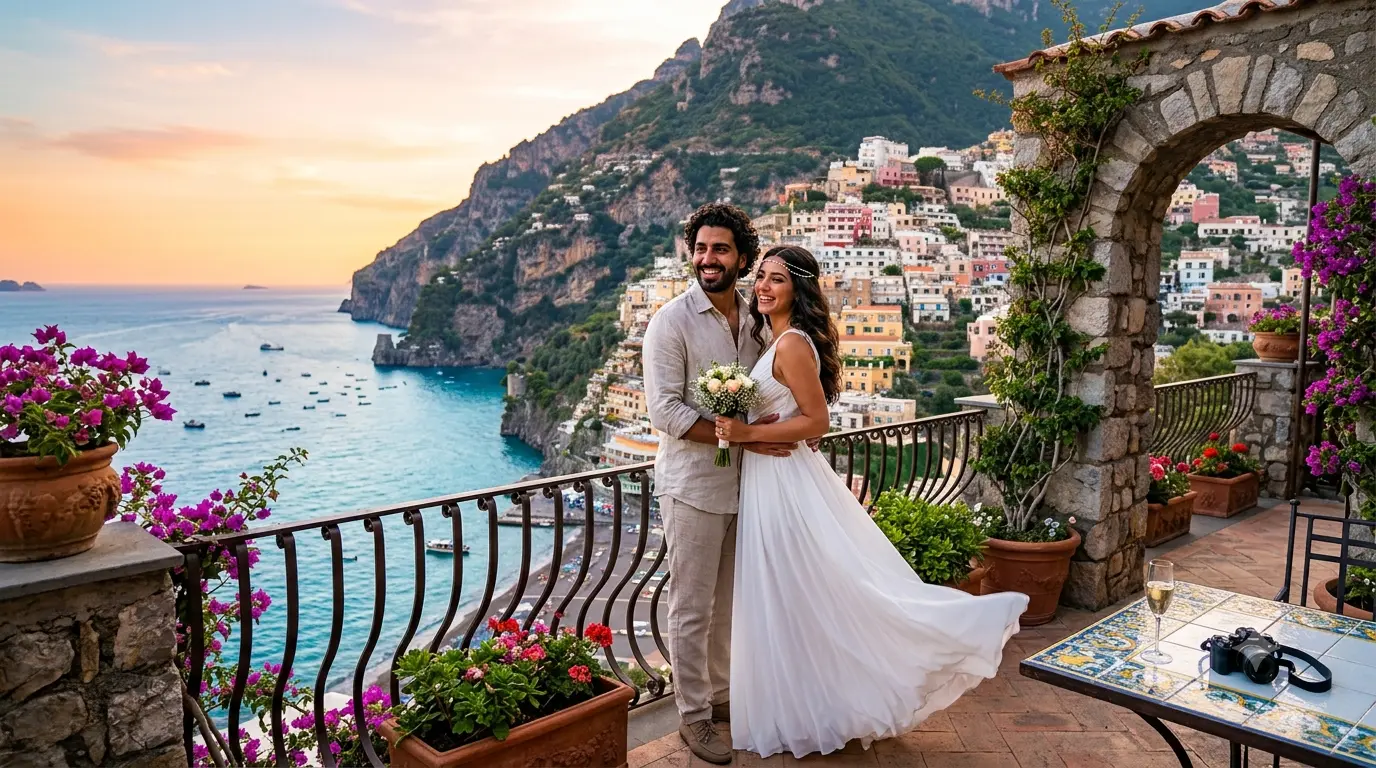
The final stretch shifts to the Amalfi Coast — Positano, Ravello, or Praiano are the most popular honeymoon bases — for cliffside dinners, boat trips along the coastline, and the kind of scenery that closes out a honeymoon on its most romantic note. Four days here allows time to actually settle in rather than rushing between villages.
Budgeting for an Italy Honeymoon
Typical Costs by Region
Rome’s mid-to-upper range hotels typically run $150 to $350 per night, Tuscan countryside villas or agriturismos run a broadly similar $150 to $400 per night depending on exact property, while Amalfi Coast accommodation commands the highest premium in the itinerary, often $250 to $600+ per night given the region’s limited inventory and dramatic settings.
A Realistic Total for the 10-Day Route
Putting the full Italy honeymoon itinerary together — flights, a mix of accommodation across all three regions, a private driver day in Tuscany, and a boat excursion on the Amalfi Coast — typically totals $6,000 to $11,000 for a couple, with accommodation and the Amalfi Coast stretch specifically representing the largest share of the budget.

Common Mistakes When Planning This Route
Trying to Fit in Too Many Stops
The most common mistake with an Italy honeymoon itinerary is adding a fourth or fifth region — Venice, the Cinque Terre, Sicily — without extending the trip length to match, which tends to turn a relaxed honeymoon into a rushed checklist of one-night stays.
Underestimating Travel Time Between Regions
Rome to Tuscany and Tuscany to the Amalfi Coast both involve several hours of travel time, whether by private driver or train-and-transfer combinations, and building at least a half-day buffer around each transition avoids arriving at the next stop exhausted rather than ready to enjoy it.
Not Booking Amalfi Coast Accommodation Early Enough
Because Amalfi Coast inventory is genuinely limited compared to Rome or Tuscany, the most sought-after cliffside properties in Positano and Ravello book out especially far in advance during peak season — this is often the first booking to lock in when building the itinerary, not the last.
Where to Stay in Each Region?
Rome: Historic Center vs. Trastevere
Staying within or near Rome’s historic center puts major sites within walking distance, while the Trastevere neighborhood offers a slightly quieter, more local atmosphere with excellent restaurants, at a short taxi ride from the main sights.
Tuscany: A Countryside Villa or Florence Itself
Couples wanting the classic Tuscan-countryside honeymoon image often base themselves at a countryside villa or agriturismo outside Florence, offering vineyard views and a slower pace, while those prioritizing museums and city walkability may prefer staying within Florence itself.
Amalfi Coast: Positano vs. Ravello vs. Praiano
Positano is the most iconic and most photographed base, though also the busiest and most expensive; Ravello, perched higher above the coast, offers a quieter, more refined atmosphere with equally dramatic views; Praiano sits between the two, offering a more relaxed, less crowded alternative with easy access to both Positano and Amalfi town.
Adjusting the Itinerary for Different Trip Lengths
A Shorter 7-Day Version
Couples with less time available can compress this Italy honeymoon itinerary into seven days by trimming Rome to two nights and Tuscany to two nights, preserving four full nights on the Amalfi Coast, since that stretch typically delivers the most memorable honeymoon moments of the three regions.
A Longer 14-Day Version
For couples with more time, extending the trip to two weeks allows either a fourth region (Venice or the Cinque Terre) or simply more breathing room within the existing three — an extra day in Tuscany for a second wine region, or additional Amalfi Coast time for a Capri day trip alongside the coastal boat excursion.
Signature Italy Honeymoon Experiences
A Private Driver Through Tuscany’s Wine Country
Rather than self-driving unfamiliar rural roads, many honeymoon itineraries include a private driver for the Tuscany leg, allowing for a relaxed vineyard tour, a countryside lunch, and photo stops along the way without either partner needing to focus on navigation.
Amalfi Coast Boat Excursions
A private boat trip along the Amalfi Coast, often stopping at Capri or smaller coves inaccessible by road, is one of the most popular honeymoon add-ons in the region, offering a different perspective on the cliffside villages than the road-level view.
Cooking Classes and Wine Tastings
Both Tuscany and the Amalfi Coast offer private cooking classes and wine tastings well suited to couples, turning an afternoon into a shared activity rather than simply sightseeing side by side.
Coordinating a Multi-Region Trip with a Travel Advisor
Why This Itinerary Benefits from Professional Coordination?
A three-region Italy honeymoon itinerary involves more moving parts than a single-destination trip — flights, a train or transfer between Rome and the Amalfi Coast, a private driver in Tuscany, and accommodation booked across three genuinely different markets. Coordinating all of this directly, rather than booking each piece independently, reduces the risk of a gap between one region’s checkout and the next region’s check-in, or a missed connection between the Rome flight and the onward journey south.
Building in the Right Amount of Flexibility
A travel advisor familiar with this specific route can also build in sensible buffer time around each transition and flag which Amalfi Coast properties are worth booking first, given how quickly the best cliffside rooms disappear during peak season.
Visa Requirements: The Schengen Process
Italy Is a Schengen Country
Since Italy is part of the Schengen Area, Lebanese travelers need a Schengen visa, applied for through the consulate handling the country where the most nights will be spent — in most cases, Italy itself, given the itinerary’s structure. The same realistic timeline covered in our Schengen visa guides applies here: starting the application three to four months ahead comfortably absorbs both the appointment wait and processing time.
Best Time for an Italy Honeymoon
Spring and Early Autumn Advantages
Late April through June and September through October offer the most comfortable weather across all three regions in this itinerary, avoiding both the intense summer heat that can make sightseeing in Rome and Tuscany less comfortable and the peak-season crowds along the Amalfi Coast.
Summer Trade-Offs
July and August bring the warmest sea temperatures for Amalfi Coast swimming but also the highest prices, the largest crowds at major Roman sites, and considerably hotter conditions for a full day of Tuscan vineyard touring.
Frequently Asked Questions
Ten days works well for the Rome-Tuscany-Amalfi Coast Italy honeymoon itinerary described here, allowing two to three nights in Rome, three nights in Tuscany, and four nights on the Amalfi Coast without feeling rushed.
Most itineraries fly directly from Beirut to Rome, then continue to Naples by connecting flight, high-speed train, or private transfer before the final drive to the coast.
Yes, since Italy is part of the Schengen Area, a Schengen visa is required, following the same process and realistic appointment-to-decision timeline as other Schengen destinations.
Positano offers the most iconic views but the biggest crowds, Ravello offers a quieter, more refined alternative, and Praiano splits the difference with a more relaxed, less expensive base.
Late April through June and September through October offer the most comfortable weather across all three regions, avoiding both summer heat and peak-season crowds.
Ready to plan an Italy honeymoon across Rome, Tuscany, and the Amalfi Coast? Request a tailored quote from Fayad Travel and we’ll help you build the right route and pace.